Category: Uncategorized

  • Upstox Demat Account Opening: How to Open Upstox Account Online?

    If you want to start investing in the stock market, Upstox account opening is one of the easiest ways to begin. With the help of the Upstox app, you can complete the entire upstox demat account opening process online within a few minutes.

    In this guide, we will explain how to open account in upstox, the documents required, and every step involved in open upstox account successfully.

    Step 1: Download the Upstox App

    To begin the upstox account opening process, go to the Google Play Store and download the Upstox app on your smartphone.

    Once the installation is complete, open the app to start the upstox demat account opening process.

    Step 2: Mobile Number Verification

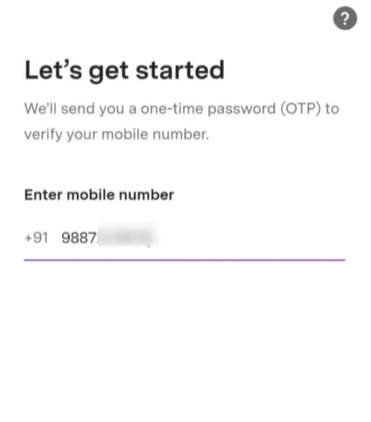
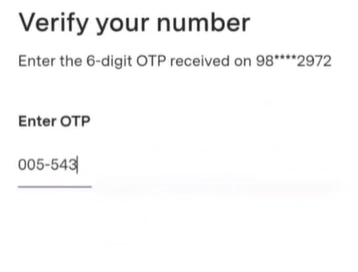
    When you open the app, the first step to open account in upstox is mobile number verification.

    You will need to:

    1. Enter your mobile number.
    2. Receive an OTP on that number.
    3. Enter the OTP in the app.

    Make sure the mobile phone whose number you entered is nearby so you can easily complete the verification during the upstox account opening process.

    Step 3: Email Address Verification

    After mobile verification, the next step in upstox account opening is verifying your email address.

    You will receive:

    • An OTP on your email, or
    • A verification link.

    Follow the instructions to complete the email verification so you can proceed further with upstox open demat account.

    Step 4: Enter Personal Details

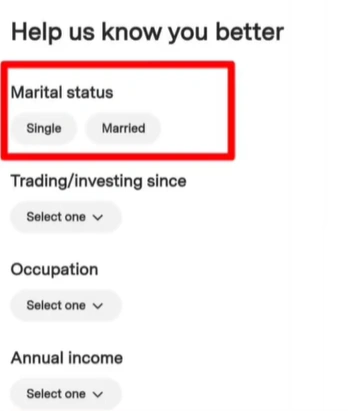
    To continue the upstox demat account opening process, you will need to enter your personal information, such as:

    • Marital status
    • Occupation
    • Income range

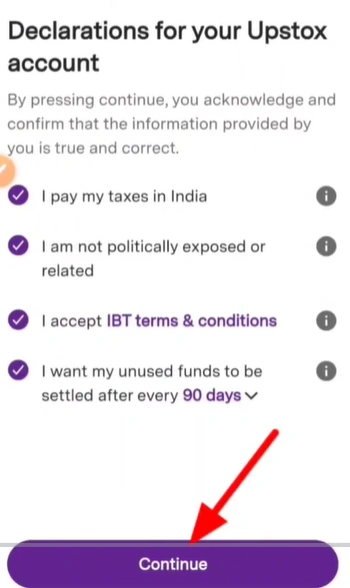
    After entering these details, you will have to e-sign a declaration confirming that the information provided during the upstox account opening process is accurate.

    Step 5: PAN Card Verification

    For regulatory requirements, you must provide your Permanent Account Number (PAN) details during the upstox open demat account process.

    After entering your PAN details:

    • Verify that your name and father’s name are correct.
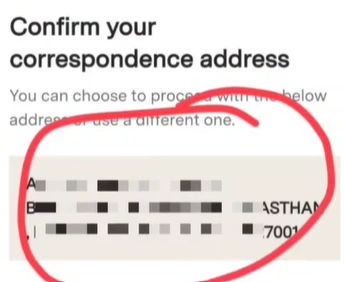
    • Check the address shown on the screen.

    Once everything is correct, click Continue to move ahead in the open account in upstox process.

    Step 6: Selfie Verification

    At this stage of the upstox account opening process, the app will ask for permission to access your camera and gallery.

    You will need to take a selfie for identity verification.

    Important tips while taking the selfie:

    • Ensure the room is well lit
    • Do not wear a cap, hat, or sunglasses
    • Make sure your face is clearly visible

    This step helps confirm your identity when you open upstox account online.

    Step 7: Linking Your Bank Account

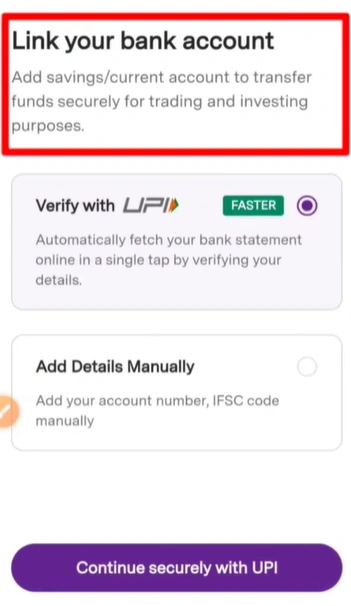
    The next step in upstox demat account opening is linking your bank account.

    You can do this in two ways.

    Option 1: Link Through UPI

    This is the easiest way to open account in upstox.

    Steps:

    1. Select your UPI app.
    2. Make a small transaction (₹1 or any small amount).

    Through this process, your bank account will automatically be linked to your trading account during upstox account opening.

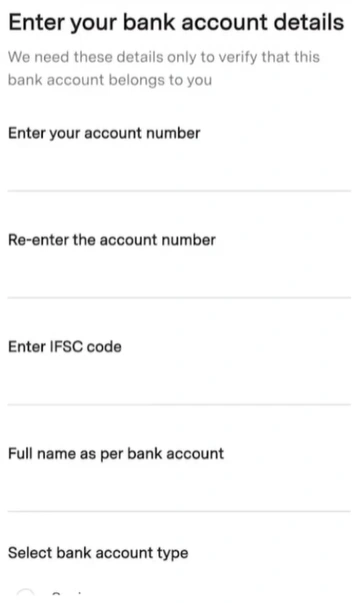
    Option 2: Manual Bank Details

    You can also manually enter your:

    • Bank account number
    • IFSC code
    • Bank name

    Either option will help complete the bank verification required to open upstox account.

    Step 8: Signature Verification

    In the next step of upstox open demat account, you will need to verify your signature.

    You can do this in two ways:

    1. Upload a picture of your signature on plain paper.
    2. Draw your signature directly on the screen.

    After submitting the signature, you can proceed to the next step in the upstox account opening process.

    Step 9: Select Trading Segments

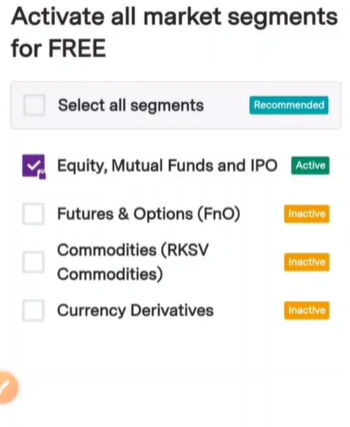
    Now you will be asked to select the trading segments when you open account in upstox.

    These segments may include:

    • Equity
    • Futures and Options
    • Currency
    • Commodities

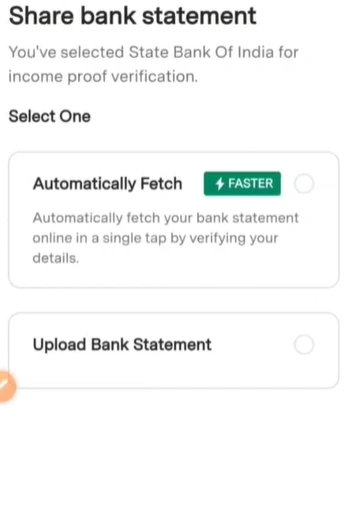
    Some segments require income proof, such as a 6-month bank statement.

    If you do not have the required documents, you can simply select the Equity segment while completing upstox demat account opening and activate other segments later.

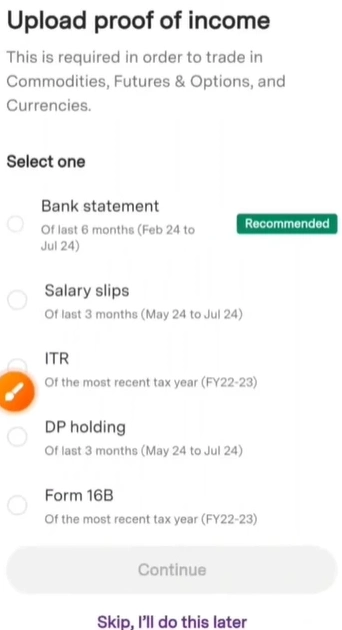
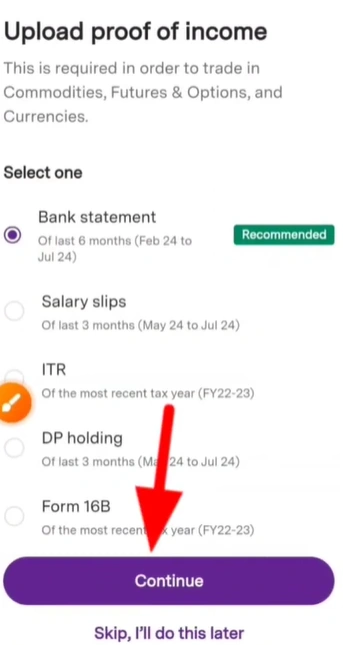
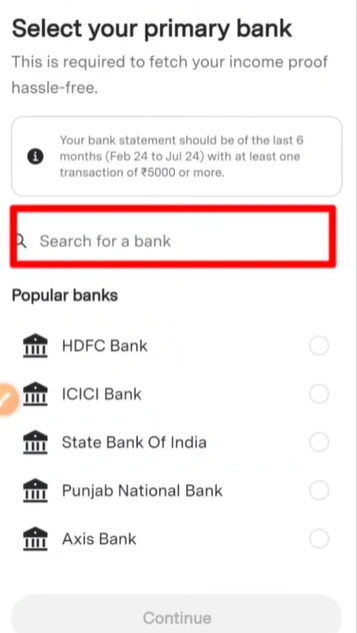
    Step 10: Upload Income Proof (Optional)

    During upstox account opening, you may be asked to submit income proof.

    This step is optional and can be completed later if needed.

    Common options include:

    • Bank statement
    • Salary slip
    • Income tax return

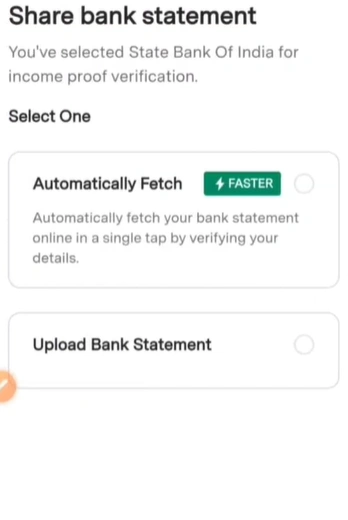
    The most common method is uploading a bank statement.

    You can either:

    • Upload it manually, or
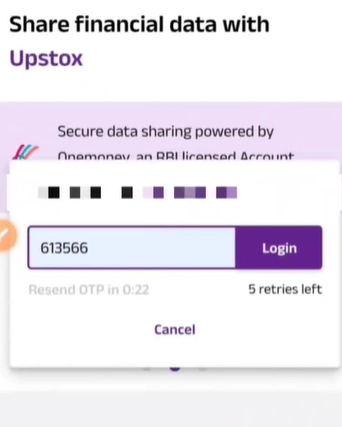
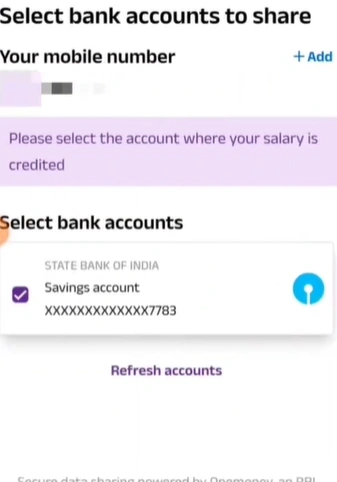
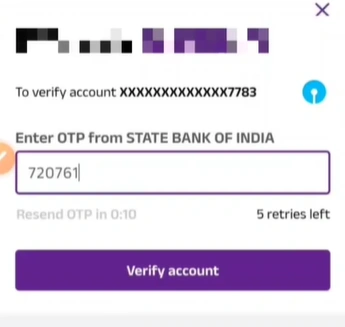
    • Automatically fetch the statement from your bank using OTP verification.

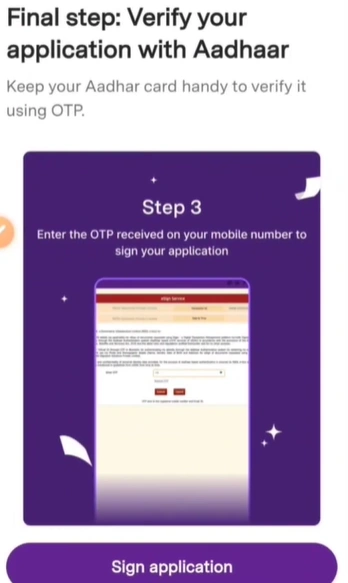
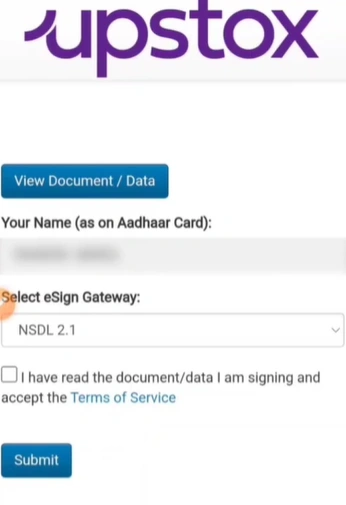
    Step 11: Aadhaar e-Sign Verification

    The final step to open upstox account is Aadhaar verification using Aadhaar.

    Steps:

    1. Click on E-Sign.
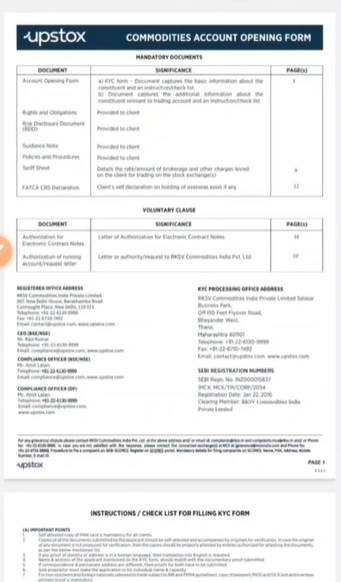
    2. Review the details entered during the upstox account opening process.
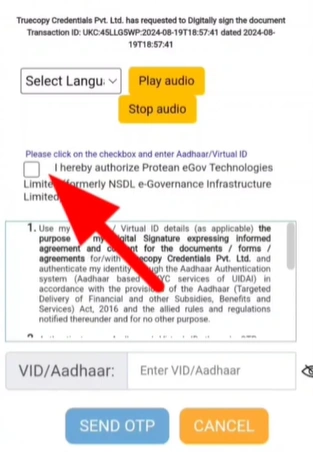
    3. Enter your Aadhaar number.
    4. Click Send OTP.
    5. Enter the OTP received on your Aadhaar-linked mobile number.

    After submitting the OTP, your upstox demat account opening application will be completed.

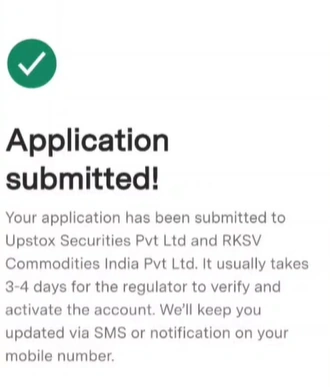
    Final Step: Application Submission

    Once all the steps are completed, you will see an acknowledgment page confirming your application submission.

    After you open account in upstox, the verification process usually takes a few days. Once approved, your open upstox account will be activated and you can start investing and trading in the stock market.

    Is Upstox account opening free?

    Yes, upstox account opening is generally free for most users. However, charges and offers may change from time to time on the Upstox platform. Once your upstox demat account opening is completed, you may still need to pay certain charges like brokerage or annual maintenance depending on the plan you choose.

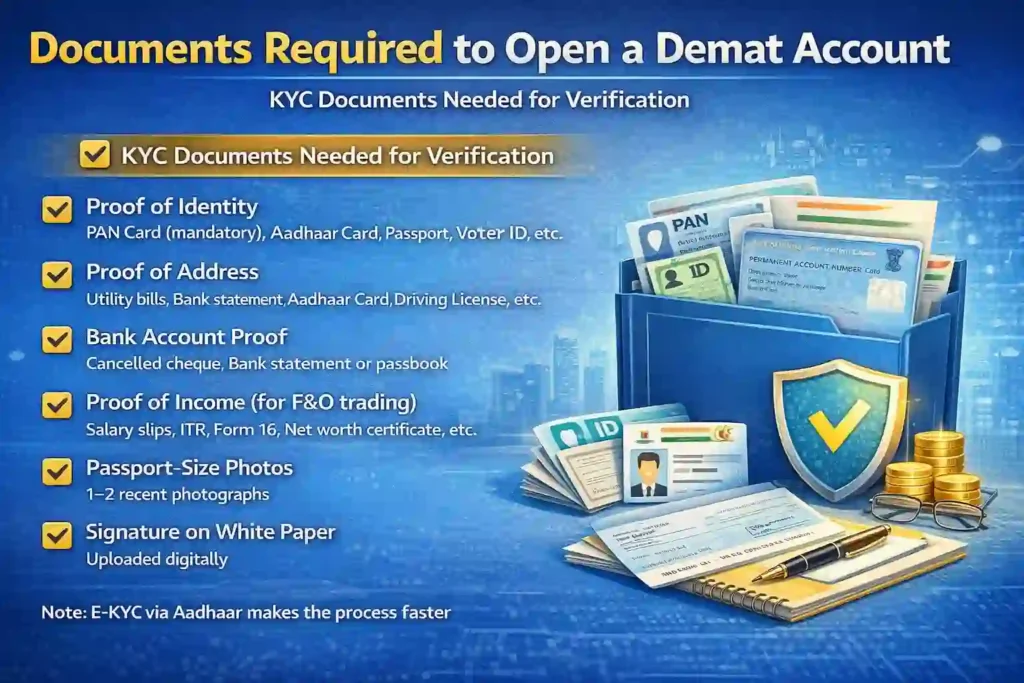
    What documents are required for Upstox account opening?

    To complete the upstox account opening process, you usually need the following documents:
    PAN Card
    Aadhaar Card
    Bank account details
    Mobile number linked with Aadhaar
    A photo of your signature
    These documents are necessary to successfully open account in upstox and verify your identity

  • Best Candle Stick Pattern Books for Beginners and Advanced Traders 2026 Guide

    Best Candle Stick Pattern Books for Beginners and Advanced Traders 2026 Guide

    Candle stick pattern books are one of the best starting points for anyone who wants to understand price action and technical analysis. While many traders depend on indicators and automated tools, the real foundation of chart reading comes from understanding candlestick patterns. These patterns help traders see market psychology directly on the chart, showing the battle between buyers and sellers in a simple visual form.

    A good book on candlestick analysis explains how each candle forms using open high low and close prices. It also teaches what different patterns like Doji Hammer Engulfing and Morning Star reveal about trend reversals or continuations. Instead of guessing market direction, traders learn to read price behavior logically and confidently.

    Today, markets move fast and emotions can lead to costly mistakes. This is why candle stick pattern books remain highly relevant. They train traders to spot high probability setups, improve entry and exit timing, and avoid false signals. Whether you are a beginner looking for a simple candlestick pattern booklet or an experienced trader searching for a complete candlestick chart book, structured learning makes a big difference.

    In this article, we will explore the best candle stick pattern books for beginners intermediate traders and advanced market participants. You will discover which trading candlestick patterns book suits your level and how to choose the right resource to build strong chart reading skills for long term trading success.

    What Makes a Good Candlesticks Pattern Book

    Not all candle stick pattern books are equally useful. A good book on candlestick analysis should make learning simple, practical, and easy to apply in real trading.

    First, it must clearly explain candlestick basics. A strong candlesticks pattern book should teach how candles are formed, what the body and shadows mean, and how patterns reflect buyer and seller psychology. Without this foundation, patterns become confusing.

    Second, it should include real chart examples. A quality trading candlestick patterns book shows how patterns appear in live markets like stocks, forex, or indices. This helps readers understand when a pattern works and when it fails.

    Third, it must teach confirmation and risk management. The best candle stick pattern books explain how to combine patterns with support and resistance, moving averages, or indicators. They also guide you on stop loss placement and avoiding false signals.

    Finally, a good candlestick chart book should match your level. Beginners may prefer a simple candlestick pattern booklet with step by step explanations, while advanced traders need deeper market context and strategy integration.

    Category 1: Core Candle Stick Pattern Books

    Core candle stick pattern books focus on the original Japanese charting methods that help traders understand price action clearly. These books teach how candlestick patterns form, what they mean, and how to use them for better entry and exit decisions. If you want to build a strong foundation in technical analysis, starting with these candle stick pattern books is essential.

    Unlike a small candlestick pattern booklet that only lists patterns, these books explain the psychology behind each candle. They help you understand why buyers or sellers are gaining control and how market sentiment shifts before big price moves. A good book on candlestick analysis does not just show patterns. It teaches context, confirmation, and risk management.

    Below are the most important core candle stick pattern books every trader should consider.

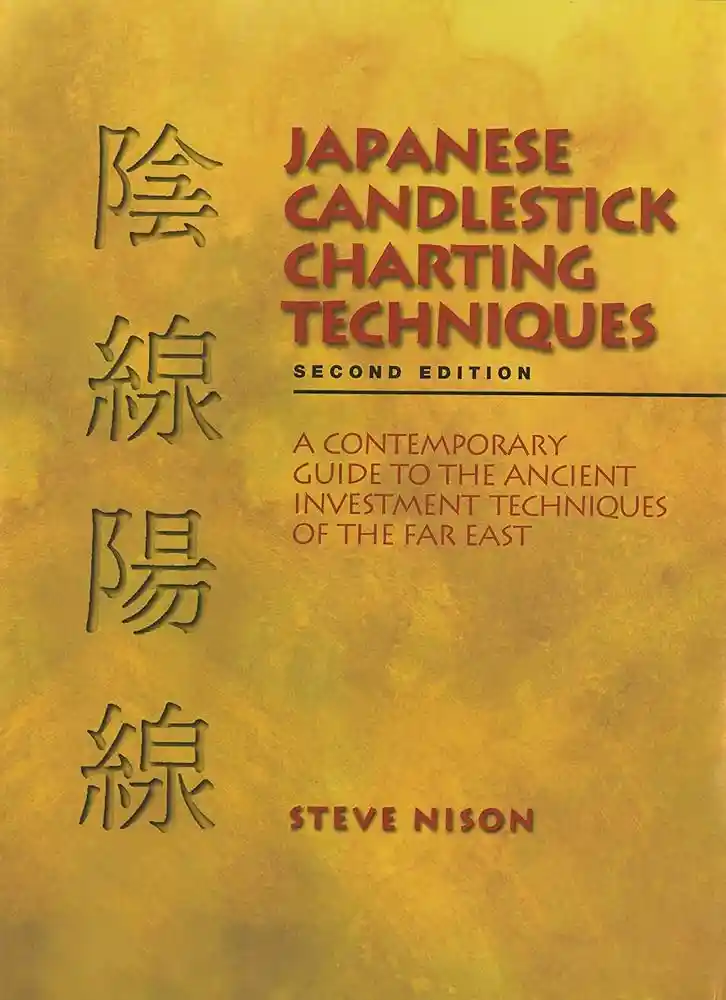
    Japanese Candlestick Charting Techniques by Steve Nison

    Japanese Candlestick Charting Techniques by Steve Nison

    This is one of the most respected candle stick pattern books ever written. Steve Nison introduced Japanese candlestick methods to Western traders and explained them in a clear and structured way.

    The book covers more than fifty patterns including Doji, Hammer, Engulfing, Morning Star, and Harami. It explains how each pattern reflects market psychology. You learn how to identify reversals, continuation signals, and indecision candles.

    What makes this book on candlestick analysis powerful is that it also shows how to combine candlestick patterns with trendlines, moving averages, RSI, MACD, and support resistance levels. This makes it more than just a candlestick chart book. It becomes a complete trading guide.

    This book is ideal for beginners and intermediate traders who want a strong foundation in trading candlestick patterns.

    Beyond Candlesticks by Steve Nison

    Beyond Candlesticks by Steve Nison

    After mastering the basics, traders can move to this advanced candlesticks pattern book. Beyond Candlesticks introduces powerful Japanese charting techniques such as Kagi, Renko, and Three Line Break charts.

    These tools help remove market noise and make trends clearer. The book teaches how to improve timing and forecast price movements with better precision.

    This trading candlestick patterns book is best for intermediate traders who already understand basic patterns. It expands your knowledge beyond traditional candles and adds depth to your analysis.

    The Candlestick Course by Steve Nison

    This book works like a structured candlestick pattern booklet but in a detailed and practical format. It includes exercises, quizzes, and real chart examples to improve pattern recognition skills.

    The book explains candle bodies, shadows, and multi candle formations in simple language. It also teaches how to place stop losses and manage risk properly.

    If you want hands on learning instead of only theory, this is one of the most practical candle stick pattern books available. It is perfect for beginners who want step by step guidance and for traders who want to improve their confidence.

    High Profit Candlestick Patterns by Stephen W Bigalow

    This book focuses on statistically tested patterns and short term trading opportunities. It combines Japanese candlestick signals with Western indicators to create high probability setups.

    Unlike a basic candlestick pattern booklet, this book emphasizes real data and practical trading rules. It explains how to identify strong setups, set proper stop losses, and execute disciplined trades.

    This book on candlestick analysis is especially useful for traders who prefer active trading and want research based strategies.

    Why These Core Books Matter

    Core candle stick pattern books build the foundation for all technical analysis. Without understanding candlestick psychology and pattern structure, it is difficult to read charts effectively.

    Whether you choose a beginner friendly candlestick chart book or an advanced trading candlestick patterns book, mastering these core resources will improve your ability to identify trends, reversals, and high probability trade setups with confidence.

    Category 2: Comprehensive Technical Analysis Books

    While many candle stick pattern books focus only on individual candlestick formations, comprehensive technical analysis books go much deeper. They teach you how to combine candlestick patterns with trends, indicators, market cycles, and intermarket relationships. Instead of relying on a single signal, you learn to build a complete trading system.

    If you want more than just a basic candlestick pattern booklet, this category is essential. These books help you understand how markets move as a whole and how candlestick patterns fit into the bigger picture.

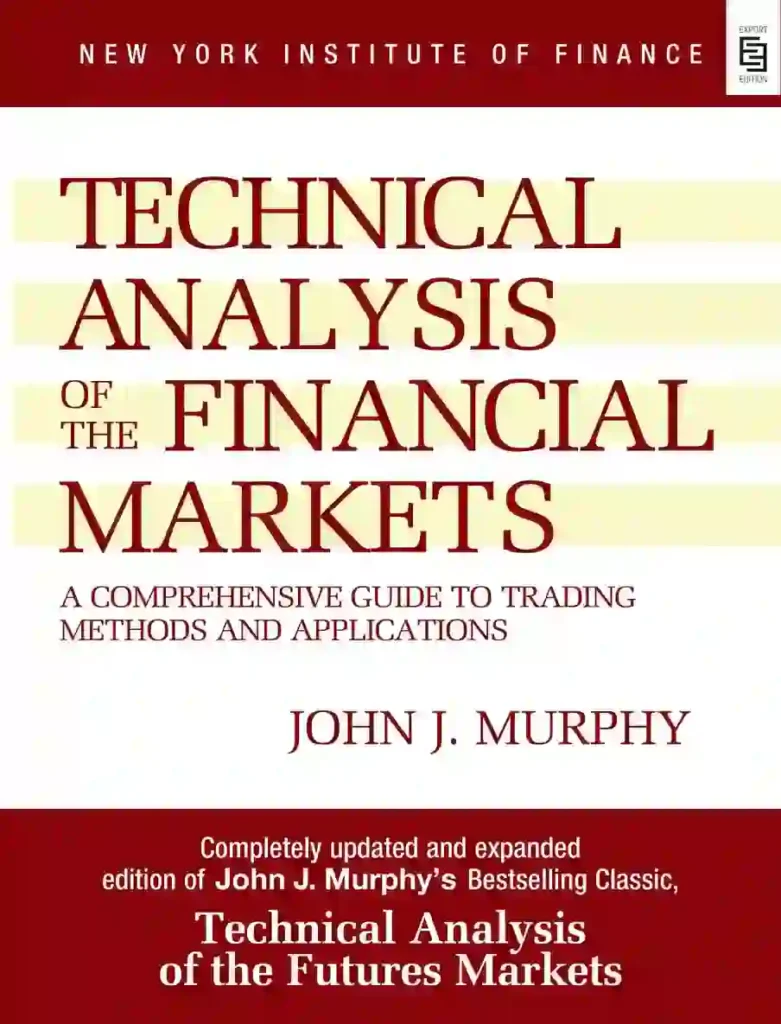
    Technical Analysis of the Financial Markets by John J. Murphy

    This book is widely considered the bible of technical analysis. It is not just a simple book on candlestick analysis. It is a complete candlestick chart book and technical reference guide used by beginners, professionals, and market analysts around the world.

    The book explains core concepts like trends, support and resistance, Dow Theory, chart patterns, volume analysis, and indicators such as RSI and MACD. It teaches that price action reflects all known information and that studying charts can help traders anticipate future price movements.

    You will learn how to identify market trends, recognize formations like head and shoulders and triangles, and use oscillators to improve timing. It also explains intermarket analysis, showing how different markets like stocks, commodities, and currencies influence each other.

    For traders who already read candle stick pattern books, this book adds structure and depth. It shows how to combine candlestick signals with moving averages, momentum indicators, and broader trend analysis. This reduces false signals and improves decision making.

    Beginners will benefit because the explanations start from the basics and gradually move toward advanced techniques. Intermediate traders will gain a more organized framework for building strategies. Experienced traders can use it as a long term reference guide.

    If you are serious about mastering technical analysis, reading only a trading candlestick patterns book is not enough. A comprehensive book like this helps you understand how candlestick patterns work within overall market structure.

    In short, while candle stick pattern books teach you how to read individual candles, comprehensive technical analysis books teach you how to read the entire market. Combining both gives traders a stronger and more reliable edge.

    Category 3: Trading Psychology and Real Trader Insights

    When people search for candle stick pattern books, they usually focus only on chart patterns, signals, and entry points. But the truth is this. Even the best book on candlestick analysis will not help you if your mindset is weak.

    Many traders know patterns like Doji, Hammer, or Engulfing. Yet they still lose money. Why? Because trading success is not only about reading charts. It is about controlling emotions, managing risk, and staying disciplined.

    That is why this category is very important. These books do not only teach technical skills. They teach you how to think like a professional trader.

    Market Wizards

    Market Wizards by Jack D. Schwager is not a traditional trading candlestick patterns book. It does not teach chart patterns directly. Instead, it shares interviews with some of the most successful traders in the world.

    In this book, you learn how top traders manage losses, handle pressure, and stay consistent. You discover that there is no secret formula. Every successful trader follows strict risk management, controls emotions, and adapts to changing markets.

    If you are reading candle stick pattern books but struggling to apply them in real trading, this book can change your perspective. It helps you understand that mindset and discipline matter just as much as technical knowledge.

    This is perfect for beginners who need motivation and intermediate traders who want to improve consistency.

    Trading in the Zone

    Trading in the Zone

    Trading in the Zone by Mark Douglas focuses completely on trading psychology. While it is not a candlestick chart book, it is one of the most important books for anyone studying a candlesticks pattern book.

    This book explains why most traders fail. It shows that fear of loss, fear of missing out, and emotional reactions destroy trading performance. Mark Douglas teaches you to think in probabilities. He explains that no pattern guarantees success. Every trade is independent.

    If you are using a book on candlestick analysis, you must accept that even strong patterns can fail. This book helps you develop that mindset.

    After reading it, traders learn to follow their system without hesitation. They stop overreacting to wins and losses. They focus on long term consistency instead of short term results.

    Why Psychology Matters Even When Reading Candle Stick Pattern Books

    You can read the best candle stick pattern books and still fail if you panic during losses or become greedy during profits. A candlestick pattern booklet may teach you entries and exits. But only psychology teaches you how to execute them calmly.

    Professional traders combine three things

    Strong technical knowledge from a trading candlestick patterns book
    Risk management rules
    Emotional discipline

    When you combine a solid book on candlestick analysis with strong trading psychology, you create a powerful edge.

    If you want long term success, do not rely only on patterns. Add mindset focused books to your learning journey. That is how you turn knowledge from candle stick pattern books into real consistent profits.

    Conclusion

    Candle stick pattern books remain one of the most powerful learning tools for traders who want to master price action. Whether you choose a simple candlestick pattern booklet or a complete candlestick chart book, the key is to understand pattern psychology and apply it with proper risk management.

    A well chosen book on candlestick analysis can help you read market sentiment, improve entry and exit timing, and trade with more confidence. Combine a trading candlestick patterns book with patience, practice, and discipline, and you will build a strong foundation for long term trading success.

    What are the best candle stick pattern books for beginners?

    The best candle stick pattern books for beginners explain basic patterns like doji and hammer in simple language with clear examples. A beginner friendly candlestick pattern booklet is ideal for building strong fundamentals.

    Which book on candlestick analysis is most detailed?

    A detailed book on candlestick analysis covers pattern psychology, confirmations, and how to combine candlesticks with indicators. A complete candlestick chart book usually offers deeper technical insights.

    Is a candlestick pattern booklet enough to start trading?

    A candlestick pattern booklet is enough to learn basics. For better results, combine a trading candlestick patterns book with risk management and indicators.

    What is the difference between a candlestick chart book and a trading candlestick patterns book?

    A candlestick chart book covers broader technical analysis. A trading candlestick patterns book mainly focuses on pattern based entry and exit strategies.

    Are candle stick pattern books still useful today?

    Yes, candle stick pattern books are still relevant because price action remains the foundation of technical analysis.

    Can candle stick pattern books guarantee profits?

    No, candle stick pattern books provide knowledge, but consistent profits depend on discipline, practice, and risk control.

  • Best Stock Market Book Recommendations for Beginners and Advanced Investors 2026 Guide

    Best Stock Market Book Recommendations for Beginners and Advanced Investors 2026 Guide

    The stock market offers one of the most powerful ways to build long term wealth, but success depends on knowledge, discipline, and the right guidance. That is why choosing the best stock market book is one of the smartest decisions any investor can make. Whether you are just starting your journey or looking to sharpen your strategy, the right stock market books can help you avoid costly mistakes and develop a clear investment approach.

    Today, there are hundreds of stock market books available, but not every title deserves your time. Some focus on long term value investing, others explain growth strategies, while a few specialize in trading and technical analysis. If you are searching for the best stock market book that matches your goals, experience level, and risk appetite, this guide will help you make the right choice.

    For beginners especially, selecting from the many stock market books for beginners can feel overwhelming. A well written best book for share market fundamentals can simplify complex topics like valuation, risk management, diversification, and market psychology. At the same time, experienced investors often look for the best investing books that go deeper into advanced analysis and proven wealth building strategies.

    In this article, we have carefully selected the best stock market book recommendations across value investing, growth investing, passive investing, and trading. Whether you want steady long term returns or active market strategies, these stock market books can give you the clarity and confidence needed to invest wisely and grow your wealth consistently.

    How We Selected the Best Stock Market Books

    Selecting the best stock market book requires more than checking popularity. With hundreds of stock market books available, we focused on quality, credibility, and long term value to ensure only the best investing books made this list.

    Author credibility

    We prioritized books written by experienced investors, fund managers, and market experts with proven track records. A best book for share market learning should come from someone who has successfully applied these strategies in real markets.

    Timeless and practical knowledge

    The best stock market book teaches principles that remain relevant over decades, such as value investing, risk management, and discipline. We selected stock market books that offer practical frameworks, real examples, and actionable insights rather than short term tips.

    Suitable for all levels

    This list includes stock market books for beginners as well as advanced investors. Whether you prefer long term investing, growth strategies, passive investing, or trading, these best investing books cover different approaches.

    Real impact and relevance

    We also considered reader feedback, long term influence, and relevance for Indian and global investors. The goal was to recommend only those titles that truly deserve to be called the best stock market book for building lasting wealth.

    SECTION 1: Value Investing Foundations

    If you are searching for the best stock market book to build long term wealth with lower risk, value investing classics are the ideal starting point. Value investing focuses on buying high quality businesses at a price lower than their intrinsic value. Instead of chasing market trends or short term price movements, this strategy emphasizes patience, discipline, and deep fundamental analysis. Many of the best investing books ever written are rooted in value investing principles.

    For readers exploring stock market books for beginners, value investing provides a strong foundation because it teaches how to think like a business owner rather than a trader. The best book for share market success is often one that helps you avoid permanent loss of capital while compounding returns steadily over time. The following stock market books have shaped generations of successful investors and are widely regarded as some of the best stock market book recommendations for serious learners.

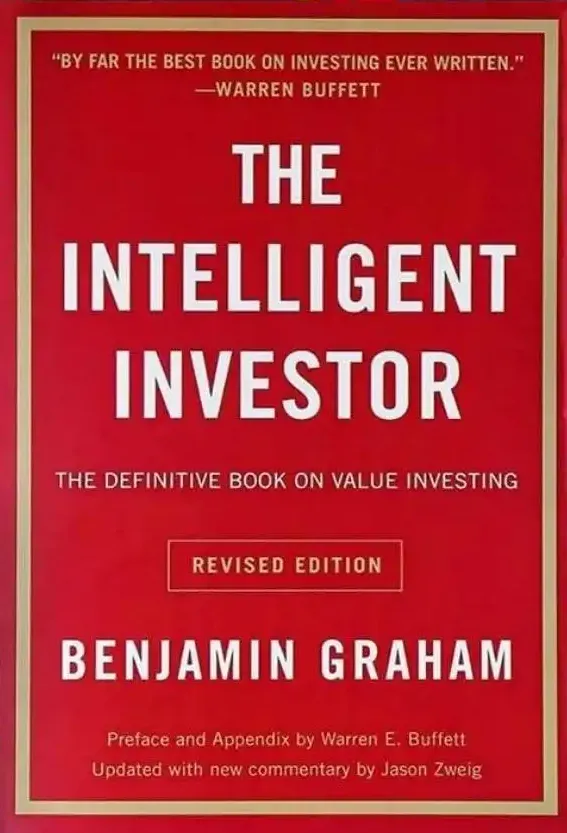
    The Intelligent Investor by Benjamin Graham

    The Intelligent Investor by Benjamin Graham

    The Intelligent Investor is widely considered the best stock market book for long term investors. First published in 1949, it introduced timeless principles that still guide modern investing. Benjamin Graham explains the difference between investing and speculation and urges readers to treat stocks as ownership in real businesses.

    One of the most important concepts in this stock market book is the margin of safety, which means buying stocks at a significant discount to their intrinsic value to reduce risk. Graham also introduces the idea of Mr. Market, a metaphor that teaches investors to take advantage of market volatility rather than be controlled by it.

    Why it stands out among stock market books
    It builds a disciplined mindset
    It teaches emotional control
    It reduces the risk of permanent capital loss
    It provides practical strategies for defensive and enterprising investors

    For anyone looking for the best stock market book that focuses on safety, long term growth, and rational decision making, this is a must read. It is especially valuable among stock market books for beginners who want to avoid common investing mistakes.

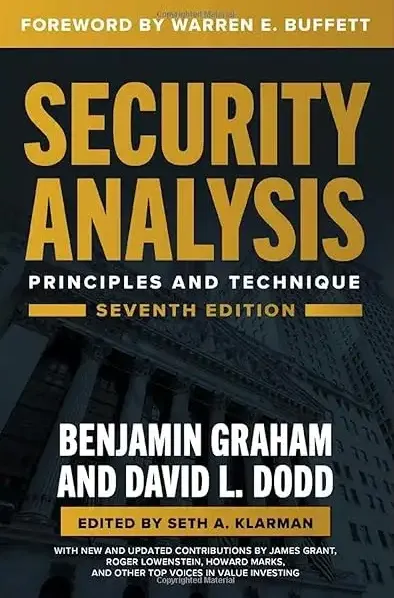
    Security Analysis by Benjamin Graham and David Dodd

    Security Analysis by Benjamin Graham and David Dodd

    Security Analysis is one of the most detailed and analytical stock market books ever written. Published during the Great Depression, it laid the foundation for modern fundamental analysis. While it is more technical than The Intelligent Investor, many professionals still consider it among the best investing books for serious investors.

    This book explains how to evaluate financial statements, analyze balance sheets, assess earnings quality, and determine intrinsic value. It reinforces the margin of safety principle and teaches investors how to distinguish between sound investments and speculative bets.

    Why it is recommended
    It offers deep fundamental analysis techniques
    It provides methods to calculate intrinsic value
    It helps investors analyze both stocks and bonds
    It develops a professional investment framework

    If you are searching for the best book for share market mastery at an advanced level, this stock market book delivers unmatched depth. It may not be the easiest read among stock market books for beginners, but dedicated readers will gain a strong analytical edge.

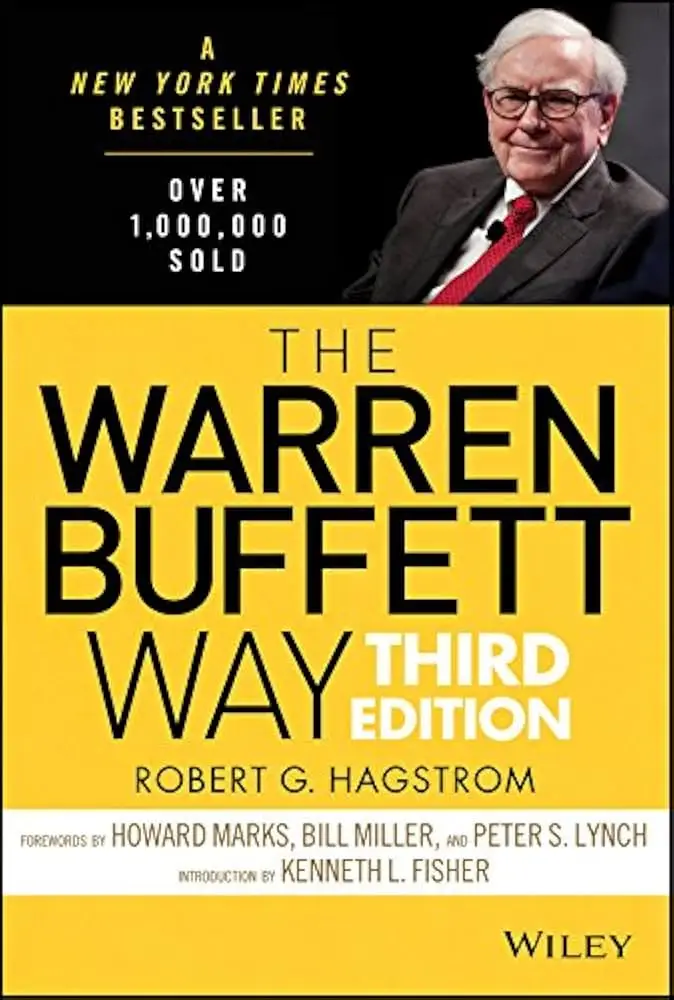
    The Warren Buffett Way by Robert G Hagstrom

    The Warren Buffett Way by Robert G Hagstrom

    The Warren Buffett Way explains how Warren Buffett applied Benjamin Graham’s principles and refined them into a powerful long term investment strategy. This book breaks down Buffett’s approach into four pillars business, management, financial strength, and valuation.

    Unlike purely theoretical stock market books, this one shows real world case studies of companies that Buffett invested in successfully. Readers learn how to identify businesses with strong competitive advantages, consistent earnings growth, and capable management.

    Why investors consider it among the best stock market book choices
    It simplifies Buffett’s investment philosophy
    It focuses on buying wonderful companies at fair prices
    It emphasizes long term compounding
    It blends theory with practical examples

    For investors looking for the best stock market book that combines value investing with real world application, this is a strong option. It is also one of the best investing books for those who admire Buffett’s disciplined approach.

    Stocks to Riches by Parag Parikh

    Stocks to Riches by Parag Parikh

    Stocks to Riches is one of the most practical stock market books for Indian investors. Parag Parikh blends value investing with behavioral finance, helping readers understand why emotions often lead to poor investment decisions.

    This book explains concepts like loss aversion, herd mentality, and market bubbles in simple language. It teaches readers to focus on long term wealth creation instead of short term speculation. For Indian readers searching for the best book for share market learning in a local context, this is a valuable resource.

    Why it deserves a place among the best stock market book lists
    It explains behavioral biases clearly
    It provides practical Indian market examples
    It promotes disciplined long term investing
    It simplifies complex financial ideas

    Among stock market books for beginners in India, this book stands out because it addresses real challenges faced by retail investors.

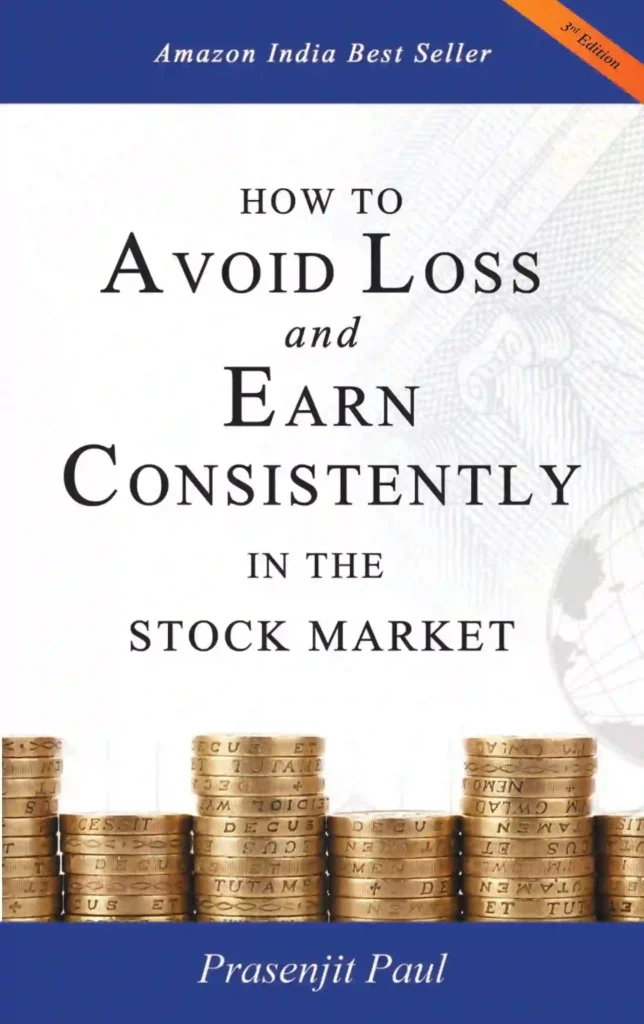
    How to Avoid Loss and Earn Consistently in the Stock Market by Prasenjit Paul

    How to Avoid Loss and Earn Consistently in the Stock Market by Prasenjit Paul

    This book focuses on helping investors reduce risk while generating consistent returns. It is designed especially for Indian retail investors who want a simple and structured approach. Compared to many complex stock market books, this one provides easy to follow steps and checklists.

    The author explains how to select fundamentally strong companies, evaluate management quality, understand valuations, and apply exit rules. Each chapter includes summaries that reinforce key lessons, making it beginner friendly.

    Why it is considered one of the best stock market book options for beginners
    It provides clear stock selection guidelines
    It focuses on capital protection
    It includes practical Indian examples
    It simplifies long term investing strategies

    For readers searching for stock market books for beginners that offer straightforward advice, this is a strong contender. It is also a practical best book for share market learners who prefer actionable strategies over theory.

    Value investing remains the backbone of many of the best investing books ever written. If your goal is steady wealth creation with controlled risk, starting with a best stock market book from this section will give you a solid foundation. These stock market books teach discipline, patience, and rational decision making qualities that separate successful investors from speculators.

    SECTION 2: Practical Growth Investing Strategies

    If you are searching for the best stock market book that focuses on real world stock picking and practical growth strategies, this section is for you. While many stock market books teach theory and deep financial analysis, growth investing books show you how to identify winning companies early and benefit from long term compounding. These best investing books are ideal for investors who want simple frameworks, clear rules, and actionable methods instead of complex valuation models.

    Growth focused stock market books are especially useful for beginners because they explain how to find strong businesses, understand earnings growth, and build portfolios that can outperform the market over time. If you are looking for the best book for share market success with a practical approach, the following titles stand out.

    One Up On Wall Street by Peter Lynch

    One Up On Wall Street by Peter Lynch

    One Up On Wall Street is often considered one of the best investing books for individual investors who want to find multibagger stocks using common sense. Peter Lynch explains that ordinary investors have an advantage over professional fund managers because they observe new trends in their daily lives before Wall Street does.

    This stock market book divides companies into categories such as slow growers, stalwarts, fast growers, cyclicals, turnarounds, and asset plays. By understanding these categories, investors can set realistic expectations and choose the right type of company for their portfolio. Lynch emphasizes studying earnings growth, price to earnings ratio, debt levels, and business expansion before investing.

    For readers looking for stock market books for beginners, this book is highly recommended because it simplifies stock selection. It teaches patience, basic research, and long term thinking without complicated formulas. If you want a best stock market book that blends simplicity with strong growth potential, this is a top choice.

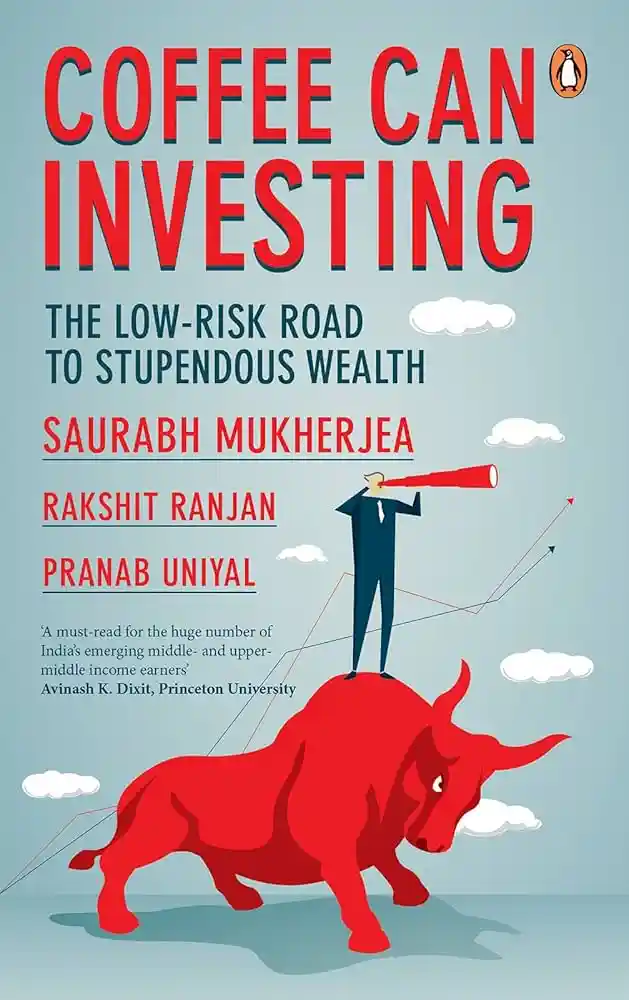
    Coffee Can Investing by Saurabh Mukherjea

    Coffee Can Investing by Saurabh Mukherjea

    Coffee Can Investing is one of the most practical stock market books for Indian investors who prefer a low maintenance strategy. Inspired by the coffee can portfolio concept, the book recommends selecting a small number of high quality companies and holding them for at least ten years without frequent buying and selling.

    This best book for share market investors focuses on companies with consistent revenue growth, high return on capital employed, clean accounting practices, and strong competitive advantages. Instead of chasing short term market movements, the strategy relies on the power of compounding.

    Among stock market books for beginners, this title stands out because it offers a clear checklist to identify quality stocks. It also explains why overtrading reduces returns and increases risk. Investors who want a disciplined, stress free approach will find this one of the best stock market book options in the growth investing category.

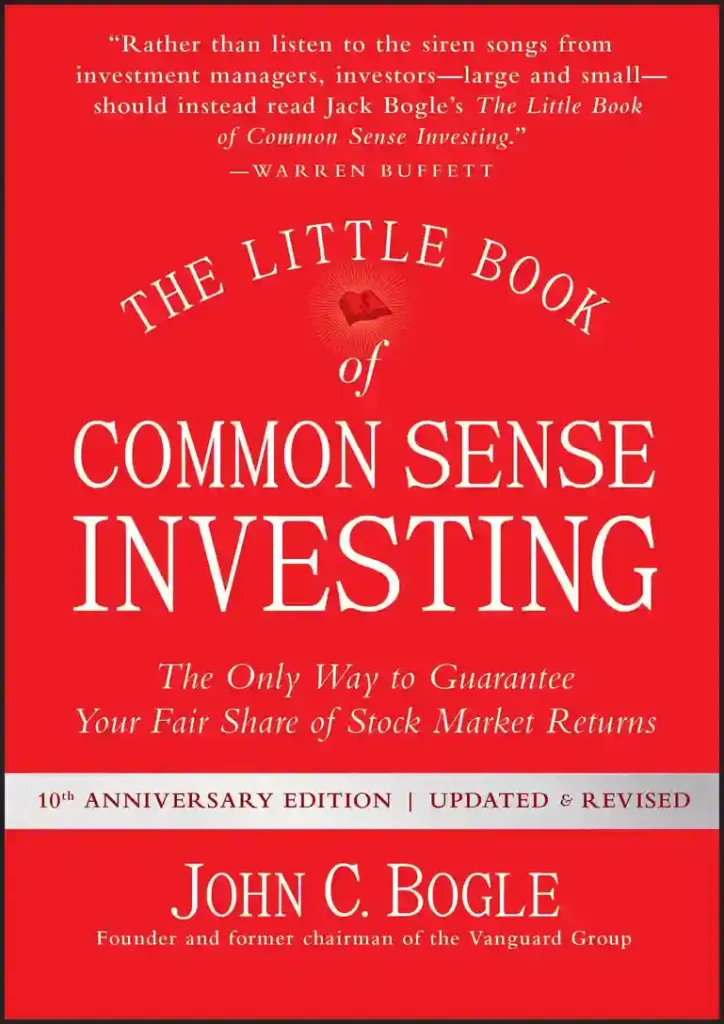
    The Little Book of Common Sense Investing by Jack Bogle

    The Little Book of Common Sense Investing by Jack Bogle

    For investors who believe that selecting individual stocks is difficult, this classic is one of the best investing books on passive growth strategies. Jack Bogle explains that instead of trying to beat the market, investors can own the entire market through low cost index funds.

    This stock market book teaches that costs, fees, and taxes eat into long term returns. By minimizing expenses and holding diversified index funds, investors can capture overall market growth. The message is simple but powerful. Stay invested, keep costs low, and allow compounding to work over decades.

    If you are searching for stock market books for beginners that require minimal analysis and time commitment, this is an excellent starting point. It is often recommended as the best stock market book for investors who want consistent wealth creation without active stock picking.

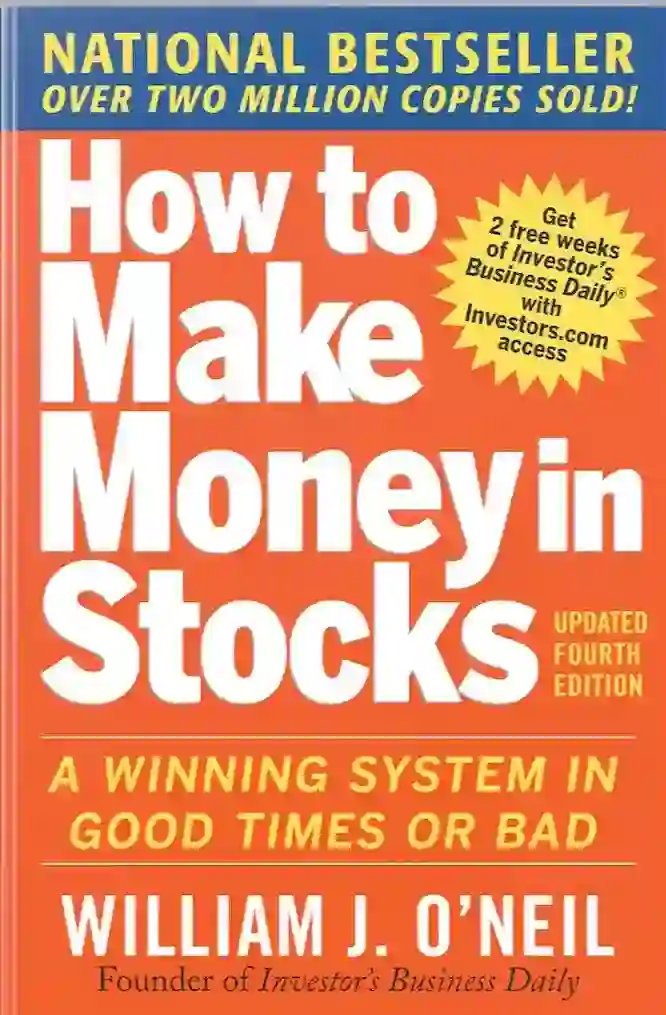
    How to Make Money in Stocks by William O Neil

    How to Make Money in Stocks by William O Neil

    How to Make Money in Stocks is a growth oriented stock market book that combines fundamentals with technical analysis. William O Neil developed the CAN SLIM strategy after studying the biggest winning stocks in history. The system focuses on strong quarterly earnings growth, annual profit increases, new products or services, institutional sponsorship, and market direction.

    Unlike traditional value based stock market books, this best investing book teaches investors how to identify emerging leaders and time their entries using chart patterns. It also stresses strict risk management, including cutting losses quickly and protecting capital.

    For readers looking for the best book for share market success with an active growth strategy, this title provides structured rules and clear guidance. It is suitable for intermediate investors who want to go beyond basic buy and hold investing while still relying on proven data driven methods.

    Why Practical Growth Investing Books Matter

    Practical growth focused stock market books help investors move from theory to action. They teach how to identify strong businesses, evaluate growth trends, and build portfolios aligned with long term wealth creation. Whether you prefer active stock picking or passive index investing, these best investing books offer proven frameworks.

    There is no single best stock market book for everyone. Some investors prefer the simplicity of index funds, while others enjoy researching companies for high growth potential. By choosing the right stock market books based on your goals and risk tolerance, you can create a strategy that fits your financial journey.

    If you are a beginner, start with stock market books for beginners that explain concepts in simple language. As you gain experience, you can move to more advanced growth strategies. The key is consistent learning and disciplined execution, which every best stock market book in this section strongly emphasizes.

    Section 3 Trading and Technical Analysis Books

    Not every investor wants to wait years for returns. Some prefer active trading where timing entries and exits correctly can significantly impact profits. If you are searching for the best stock market book focused on trading, charts, and short term strategies, this section covers some of the most respected stock market books in technical analysis and trader psychology.

    Unlike long term investing books that emphasize fundamentals, these stock market books focus on price action, patterns, volume, and market behavior. They are especially useful for active traders, swing traders, and anyone who wants to understand how markets move in the short term.

    These titles are often considered among the best investing books for traders who want structured systems, disciplined risk management, and a deeper understanding of market psychology.

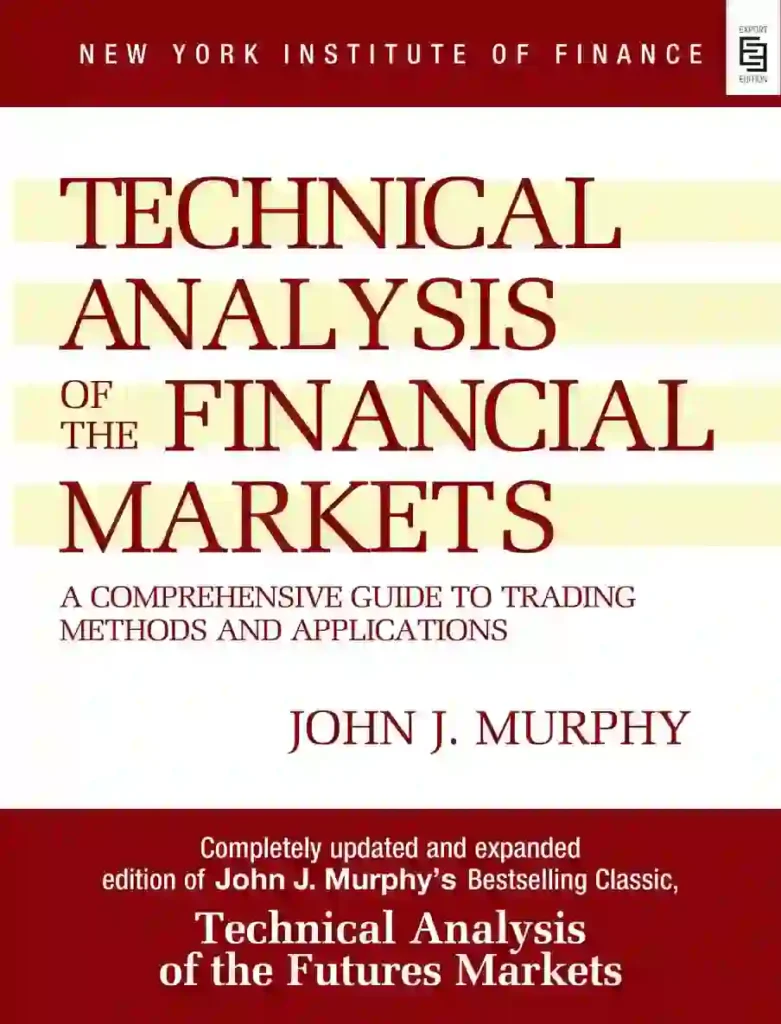
    Technical Analysis of the Financial Markets by John J. Murphy

    Technical Analysis of the Financial Markets by John J. Murphy

    Technical Analysis of the Financial Markets by John J. Murphy is widely regarded as the best stock market book for learning technical analysis in a structured and detailed manner. It is a comprehensive guide that explains how to read charts, identify trends, and use indicators to improve trading decisions.

    The book covers essential topics such as Dow Theory, support and resistance levels, trend lines, chart patterns like head and shoulders and triangles, moving averages, RSI, MACD, and volume analysis. It also explains intermarket relationships between stocks, bonds, commodities, and currencies, helping traders understand the broader market picture.

    What makes this one of the most recommended stock market books is its clarity. Murphy explains that price action reflects all available information, which forms the foundation of technical analysis. Readers learn how to identify trend reversals, confirm signals using multiple indicators, and avoid common mistakes such as relying on a single tool.

    This is not just a book for professionals. It is also suitable for those looking for stock market books for beginners who want to start with charts and technical tools. However, beginners should be prepared for detailed explanations and consistent practice.

    If your goal is active trading rather than long term investing, many traders consider this the best stock market book to build a solid technical foundation.

    Best for
    Active traders
    Swing traders
    Chart enthusiasts
    Market analysts

    Market Wizards by Jack D. Schwager

    Market Wizards by Jack D. Schwager

    Market Wizards by Jack D. Schwager is different from traditional technical manuals, but it is still considered one of the best stock market books for traders. Instead of teaching indicators directly, it shares real interviews with some of the most successful traders in the world.

    Through these interviews, readers discover how professional traders think, manage risk, handle losses, and build discipline. The book covers traders from different backgrounds including technical analysts, trend followers, and quantitative experts. This variety shows that there is no single method to succeed in trading, but there are common traits such as emotional control, strict risk management, and consistency.

    One of the biggest lessons from this stock market book is that psychology matters more than prediction. Traders learn that losses are inevitable, but controlling them is what separates winners from losers. The interviews emphasize position sizing, cutting losses quickly, and sticking to proven systems.

    For readers searching for the best book for share market trading mindset, Market Wizards offers powerful insights. It does not provide formulas, but it builds the mental framework required for long term survival in trading.

    This title also complements other stock market books that focus on charts and strategies. While technical manuals teach tools, this book teaches mindset and discipline.

    Best for
    Short term traders
    Aspiring professional traders
    Readers interested in trading psychology
    Anyone wanting real world market lessons

    Conclusion

    Choosing the best stock market book depends on your goals and experience level. There is no single best stock market book for everyone. Beginners should start with stock market books for beginners that explain fundamentals clearly, while experienced investors can explore advanced best investing books focused on strategy and analysis.

    If you want long term wealth, select a best book for share market that teaches discipline, patience, and compounding. Reading quality stock market books builds knowledge, confidence, and better decision making. The key is not just finding the best stock market book, but applying its lessons consistently to grow your wealth over time.

  • Best Options Trading App for Strategy Trading, Speed and Low Brokerage

    Best Options Trading App for Strategy Trading, Speed and Low Brokerage

    Options trading has become very popular in India because it allows traders to earn profits even when the market is moving up, down, or sideways. With the rise of mobile platforms, anyone can now trade options directly from their smartphone without needing deep technical knowledge or expensive software. However, choosing the best option trading app is very important because the wrong platform can lead to slow order execution, poor analysis tools, and unnecessary losses.

    Today, many platforms compete to be the best app for trading options, but the right choice depends on your trading style and experience level. The best options trading apps offer low and transparent brokerage, fast and reliable order placement, easy-to-understand charts, and powerful tools like options chain analysis, Greeks, payoff calculators, and strategy builders. Some traders even look for a free option trading app to start with minimal cost, while others prefer the best brokers to trade options that provide advanced research and premium tools.

    Whether you are searching for the best stock options trading platform with deep analytics or a simple beginner-friendly interface, selecting the right app can significantly impact your trading results. In this article, we compare the best options trading apps based on brokerage fees, user experience, options-specific tools, execution speed, security, and real user feedback. Whether you are just starting or already an active trader, this guide will help you choose the right platform for your trading goals.

    What Makes a Best Options Trading App?

    What Makes a Good Options Trading App

    Not all trading apps are built for options trading. A good options trading app should help you place trades quickly, understand risk clearly, and manage positions without confusion. Below are the key qualities that separate an average app from a great one.

    Simple and Easy to Use Interface :- Options trading involves many details like strike prices, expiry dates, and premiums. A good app presents all this information in a clean and organized way. Beginners should be able to place trades without feeling overwhelmed, while experienced traders should be able to move fast without extra steps.

    Transparent and Affordable Brokerage :- The best options trading apps clearly show their brokerage charges. Flat fees per order are easier to understand than percentage-based pricing. A good app also displays additional charges like STT, exchange fees, and GST upfront, so there are no surprises after placing a trade.

    Powerful Options Trading Tools :- A reliable options trading app provides tools such as options chain analysis, Greeks like Delta and Theta, payoff charts, and strategy builders. These tools help traders understand potential profit and loss before entering a trade, which is very important in options trading.

    Advanced Charts and Market Analysis :- Charts play a major role in options trading. A good app offers real-time price charts with popular indicators like RSI, moving averages, and Bollinger Bands. Some apps also provide TradingView charts and basic backtesting features, which help traders analyze market trends more effectively.

    Fast Order Execution and Platform Stability :- n options trading, even a small delay can affect profits. A good trading app places orders quickly and works smoothly during high market volatility. The app should not crash or lag during important market hours.

    Clear Margin and Risk Management Information :- A good options trading app clearly shows margin requirements and available leverage. It should also provide exposure calculators and risk indicators, helping traders avoid overtrading and unexpected losses.

    Strong Security and Regulatory Compliance :- Safety is non-negotiable when money is involved. A trustworthy options trading app is registered with SEBI and uses features like two-factor authentication and data encryption. This ensures your funds and personal information remain secure.

    Reliable Customer Support :- When technical or trading issues arise, quick support is essential. A good app offers responsive customer support through chat, phone, or email, with reasonable resolution times.

    Useful Extra Features for Traders :- Top options trading apps go beyond basic trading. Features like price alerts, stock screeners, educational content, and API access for algorithmic trading add extra value, especially for active traders.

    Feature Comparison of Top Options Trading Apps in India (Only Unique Factors)

    Feature Comparison of Top Options Trading Apps in India

    When choosing an options trading app, many features like charts, order types, and execution speed are common across platforms. What truly matters is the unique advantage each app offers. Below is a comparison focused only on what makes each platform different from the rest.

    Zerodha Kite

    Zerodha Kite stands out because of its powerful strategy ecosystem integration with Sensibull. It is especially strong for traders who want ready-made multi-leg strategies such as spreads, butterflies, and advanced setups based on Greeks and implied volatility. This makes it highly useful for structured options strategy trading.

    Dhan

    Dhan is designed with an options-first approach. Unlike most platforms that support options as one of many features, Dhan focuses heavily on options trading tools such as Flash Trade and custom strategy builders with visual payoff analysis. It is ideal for traders who want deep control over strategy creation.

    Upstox Pro

    Upstox Pro is widely recognised for its high-speed execution and strong API access. This makes it particularly attractive for traders who depend on fast order placement, automation, or algorithmic trading setups.

    Angel One

    Angel One differentiates itself through AI-driven trading insights and recommendations. Instead of relying entirely on manual analysis, traders receive data-based suggestions and portfolio intelligence, which is especially helpful for those who want guided decision-making.

    Hedged.in

    Hedged.in focuses specifically on risk-managed trading. It generates hedged options strategies with clear entry and exit alerts, making it suitable for traders whose priority is capital protection rather than aggressive speculation.

    ICICI Direct Neo

    ICICI Direct Neo stands out for its strong banking-backed reliability. Being associated with a major financial institution, it offers stability, trusted liquidity, and a flat-fee structure for F&O trading, which appeals to traders who value security and consistency.

    Strike Money

    Strike Money is known for its deep analytics and research-driven trading approach. It offers advanced backtesting, detailed Greeks analysis, and market sentiment tools, making it suitable for traders who rely heavily on data and strategy optimisation.

    5Paisa

    5Paisa’s main advantage is cost efficiency. It is built for traders who execute high volumes and want lower trading costs along with access to leverage. This makes it appealing for frequent and active traders.

    Fyers

    Fyers is best known for its advanced charting environment. With support for multiple chart layouts and technical analysis tools, it is particularly useful for traders who depend heavily on price action and technical strategies.

    Groww

    Groww stands out for simplicity. Its clean interface and easy navigation make options trading less intimidating, especially for beginners or casual traders who prefer a straightforward and minimal learning curve.

    Zerodha Kite Options Trading App Review

    AspectDetails
    Overview Who Should Use Zerodha KiteIdeal for beginners and active F&O traders seeking a lightweight mobile platform for stocks, options, and quick trades .
    Brokerage FeesFlat Rs 20 per order for options, zero for delivery equity, no platform fees .
    UI Ease of UseClean, intuitive design with easy navigation, order placement from charts, suits all levels .
    Options Trading Tools Sensibull Greeks StrategiesIntegrated Sensibull for option chains, Greeks, IV, OI, ready strategies like spreads and butterflies .
    Charts AnalyticsAdvanced charting, real-time data, technical tools, TradingView integration requested by users .
    Execution Speed ReliabilityFast order execution, stable even in peaks, rare lags during high volatility .
    Margin LeverageStandard SPAN margins for F&O, competitive leverage via MIS for intraday options ​.
    Security ComplianceSEBI-regulated, 2FA, secure login, no major breaches reported ​.
    Customer SupportTicket-based, slow during peaks, educational resources via Varsity .
    Pros ConsPros Clean UI, low fees, strong options tools. Cons Occasional lags, basic advanced features .
    Final Verdict Rating Score out of 10Top choice for options trading, reliable and cost-effective. Rating 9/10 .

    Dhan Options Trading App Review

    AspectDetails
    Overview Who Should UseTech-savvy F&O traders and active investors using TradingView charts. Best for options pros not needing research guidance.
    Brokerage FeesFlat Rs 20 per options trade. Rs 20 or 0.03 percent lower on futures. No account opening fees.
    UI Ease of UseUser-friendly mobile app web platform and dedicated options interface. Simple for chart-focused trading.
    Options Trading ToolsCustom strategy builder pre-built strategies Flash Trade Greeks payoff graphs and screener.
    Charts AnalyticsTradingView integration 100 plus indicators real-time volumes and options chain data.
    Execution Speed ReliabilityFast execution for large orders smooth with advanced types like Iceberg Trailing SL.
    Margin LeverageUp to 5x on 1700 plus stocks instant pledge on 1500 plus for options. MTF available.
    Security ComplianceSEBI compliant safe broker with data protection and no unsolicited contact.​
    Customer Support24 by 7 support via app.​
    Pros ConsPros Low fees multiple platforms rich analytics dedicated options app. Cons Lacks fixed-income research.​
    Final Verdict RatingStrong for options traders. Rating 8.5 out of 10.

    Upstox Pro Options Trading App Review

    AspectDetails
    Overview Who Should UseWeb and mobile app for stocks F&O currencies. Best for active options traders needing speed and charts .
    Brokerage FeesFlat Rs 20 per order or 0.05% whichever lower for options. Zero for delivery equity ​.
    UI Ease of UseClean intuitive HTML5 design customizable workspaces. Highly rated for mobile ease .
    Options Trading ToolsBracket cover orders price alerts API support. Direct chart trading .
    Charts AnalyticsTradingView charts 100+ indicators 13 types multi-interval. Up to 4 charts per window ​.
    Execution Speed ReliabilityUltra-fast HTML5 platform reliable order execution. Users praise speed .
    Margin LeverageCompetitive F&O margins up to 4x leverage on options. Varies by segment ​.
    Security ComplianceSEBI registered strong encryption 2FA. Compliant with NSE BSE ​.
    Customer SupportPhone email chat support. Mixed user feedback on response time ​.
    Pros ConsPros Fast charts low fees mobile friendly. Cons No commodities limited advanced algos .
    Final Verdict RatingSolid for options trading great for pros. Rating 8.5/10 

    Angel One Options Trading App Review

    AspectDetails
    Overview Who Should UseTech-savvy active traders beginners investors seeking low-cost F&O trading mobile-first platform.
    Brokerage FeesFlat Rs 20 per order across segments free equity delivery brokerage.
    UI Ease of UseIntuitive dashboard clean interface beginner-friendly mobile super app.
    Options Trading ToolsOption chain strategy builder Sensibull integration Greeks payoff charts.
    Charts AnalyticsTradingView charts 100+ indicators candlestick analysis OI access smart portfolio analyser.
    Execution Speed ReliabilityFast order placement real-time data reliable mobile web platforms.
    Margin LeverageUp to 4X leverage via MTF competitive margins for options.
    Security ComplianceSEBI registered strong encryption secure demat no major complaints.
    Customer SupportPhone chat email community forums responsive but can improve.
    Pros ConsPros Low fees advanced tools AI insights. Cons High margin funding charges no global access desktop app outdated.​
    Final Verdict RatingSolid for Indian options traders worth using. Rating 8.5/10.

    Hedged.in Options Trading Platform Review

    AspectDetails
    Overview Who Should UseAI-driven alerts for options and hedged funds ideal for beginners and intermediate Indian traders seeking guided trades. 
    Brokerage FeesNot a broker zero direct fees focuses on advisory and signals via app subscriptions. 
    UI Ease of UseSimple mobile-first app with step-by-step notifications easy for new users. 
    Options Trading ToolsGenerates hedged options ideas via AIR algorithm with entry exit guides. 
    Charts AnalyticsBasic trade visuals no advanced charting relies on algo signals. ​
    Execution Speed ReliabilityManual execution via user broker app speed depends on your broker reliable alerts. ​
    Margin LeverageGuides hedged positions to limit risk no direct margin trading. ​
    Security ComplianceStandard app security NSE/BSE compliant as advisory platform. ​
    Customer SupportIn-app notifications and FAQs responsive for trade updates. 
    Pros ConsPros: Easy alerts hedged focus. Cons: No broker integration limited charts. 
    Final Verdict RatingGood for guided options entry rating 7.5/10. 

    ICICI Direct Neo Options Trading App Review

    AspectDetails
    Overview Who Should UseDiscount brokerage app for F&O traders seeking low flat fees. Ideal for active options and intraday traders, not casual equity investors .
    Brokerage FeesRs 20 per order for options, equity intraday, currency, commodity F&O. Zero brokerage on equity futures .
    UI Ease of UseSimple intuitive mobile interface for quick trading access ​.
    Options Trading ToolsBasic order placement, strategy builders for F&O with flat fee support ​.
    Charts AnalyticsReal-time charts, NIFTY tracking, live market data ​.
    Execution Speed ReliabilityFast order execution with reliable platform from ICICI ​.
    Margin LeverageStandard margins with quick liquidity in 5-30 minutes on sales .
    Security ComplianceICICI bank-backed, compliant with SEBI regulations ​.
    Customer SupportPhone, email support via ICICI Direct network ​.
    Pros ConsPros: Low fees, zero futures brokerage, fast payouts. Cons: High equity delivery at 0.55%, add-on plan only .
    Final Verdict RatingGood for F&O traders. Rating 8/10 ​.

    Strike Money Options Trading App Review

    CategoryDetails
    Overview Who Should UseOptions analysis platform for intermediate traders analyzing chains Greeks IV OI. Best for F&O strategy builders not beginners. Pairs with brokers like Zerodha.
    Brokerage FeesNot a broker zero AMC. Uses partner brokers Rs 20 per order plus exchange SEBI fees.​
    UI Ease of UseClean smooth TradingView powered interface. Fast navigation responsive on mobile web.
    Options Trading ToolsAdvanced chain with IV OI Greeks strategy builder payoff visuals simulation backtesting.
    Charts AnalyticsTradingView charts heatmaps RRG sentiment indicators scanners futures tools.
    Execution Speed ReliabilityFast order placement low slippage via broker integration. Stable during peaks.​
    Margin LeverageSEBI compliant via partner brokers. Built in margin calculator.​
    Security ComplianceStandard SEBI regulated broker integrations. Secure data handling.​
    Customer SupportEmail phone 24/5 moderate response. Improving but not fastest.​
    Pros ConsPros Best charting strategy tools API access no AMC. Cons Not full broker support lags occasional limited MFs.​
    Final Verdict RatingTop options analysis app for India. Rating 8.7/10.​

    5Paisa Options Trading App Review

    AspectDetails
    Overview Who Should UseDiscount broker app for stocks F&O commodities. Best for cost-conscious active traders beginners to pros .
    Brokerage FeesFlat Rs 20 per order across segments. No hidden charges zero commission mutual funds .
    UI Ease of UseUser-friendly unified dashboard multilingual support. Seamless for novices pros .
    Options Trading ToolsFnO 360 option chain Greeks OI analysis strategy builder .
    Charts AnalyticsTradingView ChartsIQ advanced charting 100 indicators real-time depth alerts .
    Execution Speed ReliabilityLightning-fast order placement shortcut keys reliable execution .
    Margin LeverageUp to 4X leverage MTF at 0.026 percent per day high margins for F&O .
    Security CompliancePaperless KYC SEBI registered secure demat instant transfers .
    Customer Support24×7 support but needs improvement call trade extra .
    Pros ConsPros Low fees free research advanced tools. Cons Poor support higher exchange fees no NRI ​.
    Final Verdict RatingSolid low-cost option for options trading. Rating 8 out of 10 

    Fyers Options Trading App Review

    AspectDetails
    Overview Who Should UseDiscount broker app for intraday and options traders seeking low fees and advanced charts. Best for tech-savvy users comfortable with TradingView. 
    Brokerage FeesFlat Rs 20 per order across segments. Zero account opening or AMC fees. Competitive for high-volume traders. 
    UI Ease of UseClean, intuitive mobile and web interface. Supports multi-charts, customizable layouts, and shortcut orders. Beginner-friendly yet powerful. 
    Options Trading ToolsInstaOptions for 43+ strategies. Option chain customization, smart orders, and scalper terminal. Direct chart trading. 
    Charts AnalyticsTradingView-powered with 20+ years EOD data, real-time screeners, heatmaps, and technical indicators. Multi-chart up to 8 views. 
    Execution Speed ReliabilityFast order execution, low latency reported. Rare downtimes. Reliable for intraday and expiry trading. 
    Margin LeverageDynamic margin calculator updated daily. High leverage on FNO with banned scrip checks. No manual calculations needed. ​
    Security ComplianceSEBI-registered, secure login, and compliance features. No major breaches noted in reviews. ​
    Customer SupportResponsive via app chat and email. Polite but limited offline presence. 
    Pros ConsPros: Low costs, TradingView integration, fast execution, rich tools. Cons: Limited research reports, occasional app glitches on mobile. 
    Final Verdict RatingStrong for options traders prioritizing tools and speed. Rating 8.5/10.

    Groww Options Trading App Review

    AspectDetails 
    Overview Who Should UseBeginner-friendly app for stocks F&O mutual funds; ideal for new investors casual traders avoiding complexity.
    Brokerage FeesFlat Rs 20 per order across segments; zero account opening no AMC for many users.
    UI Ease of UseClean intuitive interface; easy navigation praised for simplicity speed on mobile web.
    Options Trading ToolsOption chain basket orders payoff graphs Safe Exit Fast Exit; supports NIFTY calls puts.
    Charts AnalyticsTradingView charts candlestick patterns indicators; real-time portfolio overview Greeks analysis.
    Execution Speed ReliabilityFast order placement execution; stable app with push notifications minimal downtime reported.
    Margin LeverageInstant margin calculator; up to regulatory limits with volatility-based pledges notifications.
    Security Compliance128-bit encryption SEBI-regulated; secure UPI funding compliant disclosures.
    Customer Support24/7 chat phone email; responsive but mixed ratings on resolution speed.
    Pros ConsPros: Low fees user-friendly advanced F&O tools zero opening charges. Cons: Limited advanced research customer service gaps.
    Final Verdict RatingSolid for beginners intermediates; 8.2/10 based on usability features value. 

    Best Options Trading App by Use Case

    Use CaseBest AppIdeal ForKey Reasons
    BeginnersAngel One, GrowwNew traders learning optionsEasy app design, guided trading, basic education tools
    Intraday options tradingUpstox ProTraders buying and selling on the same dayVery fast order execution, stable during volatile markets
    Strategy-based options tradingZerodha Kite, DhanTraders using spreads and hedged strategiesStrategy builders, payoff charts, detailed options chain
    Low-cost options trading5PaisaHigh-frequency and budget tradersLower brokerage per order, cost-efficient for volume
    Advanced analytics and backtestingStrike Money, FyersExperienced and data-driven tradersBacktesting, advanced indicators, professional charts
    Risk-managed options tradingHedged.inTraders focused on capital protectionPre-built hedged strategies, controlled downside risk
    Full-service options tradingICICI Direct NeoInvestors needing research supportIn-depth research reports, expert insights, ecosystem

    Which Is the Best Options Trading App in India?

    Which Is the Best Options Trading App in India

    There is no single best options trading app for everyone. The right choice depends on your trading style, experience level, and goals.

    Zerodha Kite stands out as the best overall options trading app in India due to its low brokerage, reliable performance, and strong strategy tools through Sensibull. It works well for both beginners and experienced options traders.

    If speed is your priority for intraday or expiry trading, Upstox Pro and Fyers are excellent choices. Traders who focus on strategy building and deep analysis will find Dhan and Strike Money more suitable. Beginners looking for a simple and clean experience can confidently start with Groww or Angel One, while cost-conscious high-volume traders may prefer 5Paisa. For those who want controlled risk and guided trades, Hedged.in offers a different and safer approach.

    In the end, the best options trading app is the one that matches your risk appetite, trading frequency, and comfort with tools. Choose wisely, trade responsibly, and focus on consistency over quick profits.

  • Best Paper Trading App for Beginners – Compare Top Virtual Trading Platforms

    Best Paper Trading App for Beginners – Compare Top Virtual Trading Platforms

    Learning stock market trading without practice is like learning to drive without training. This is where paper trading apps become useful. A paper trading app lets you buy and sell stocks, options, or indices using virtual money, so you can practice trading without risking real cash. These apps show real market prices and help beginners understand how trading actually works.

    In India, many beginners search for the best paper trading app, best demo trading app, best paper trading websites, or best virtual trading app to learn safely before entering live markets. Whether you want to practice intraday trading, test options strategies, or understand market movements, paper trading apps make learning easy and risk-free.

    In this article, we compare the best paper trading apps in India based on features, virtual cash, accuracy, ease of use, and suitability for different traders, helping you choose the right app for your trading journey.

    What Is Paper Trading and How Does It Work?

    What Is Paper Trading and How Does It Work

    Paper trading is a way to practice stock market trading without using real money. Instead of investing your hard-earned cash, you trade with virtual money in a simulated market environment. This helps beginners learn how trading works without any financial risk.

    In a paper trading app, the market prices are usually taken from real NSE or BSE data. This means when you buy or sell a stock, option, or index, the price moves just like it does in the real market. The only difference is that profits and losses are not real.

    Here’s how paper trading works in simple steps:

    1. You sign up on a paper trading or demo trading app.
    2. The app gives you virtual cash (for example ₹10 lakh or more).
    3. You place buy or sell orders just like real trading.
    4. Your trades are tracked, and the app shows profit, loss, and performance reports.
    5. You can reset the virtual money and practice again.

    Paper trading is mainly used to learn trading basics, test strategies, and understand market movements. It is especially helpful for beginners and for people who want to practice options or intraday trading before moving to live trading.

    Why Use a Paper Trading App Before Live Trading?

    Paper trading apps let you practice trading in the stock market without using real money. You trade with virtual cash, but prices move just like the real market. This makes them perfect for learning safely.

    First, paper trading helps you understand how trading actually works. You learn how to place buy and sell orders, use stop-loss, read charts, and follow market timings. All this happens without the fear of losing money.

    Second, it allows you to test your trading strategies. Whether you are trying intraday trading, options, or swing trading, you can check what works and what doesn’t before risking real capital.

    Third, paper trading helps in building confidence. Beginners often panic during market ups and downs. Practicing regularly in a demo trading app helps you control emotions and take better decisions.

    Most importantly, it helps you avoid beginner mistakes like overtrading, wrong order placement, or ignoring risk management. Making these mistakes with virtual money is far better than learning after losing real money.

    Key Parameters Used to Compare the Best Paper Trading Apps

    ParameterWhat It Means (Simple Explanation)
    Virtual CashAmount of fake money given to practice trading without risk
    Market Data AccuracyWhether the app shows real or near real-time NSE/BSE prices
    Supported SegmentsTrading options available such as stocks, intraday, F&O, and indices
    Order TypesTypes of orders supported like market, limit, and stop-loss
    Ease of UseHow simple the app or website is for beginners to understand
    Simulation AccuracyHow closely the app copies real market conditions
    Analytics & ReportsProfit/loss reports, trade history, charts, and indicators
    Pricing & Free AccessWhether the app is free or paid and what features are included
    User Reviews & RatingsFeedback and ratings from Indian users on app stores
    Best ForWho the app is most suitable for (beginners, options traders, etc.)

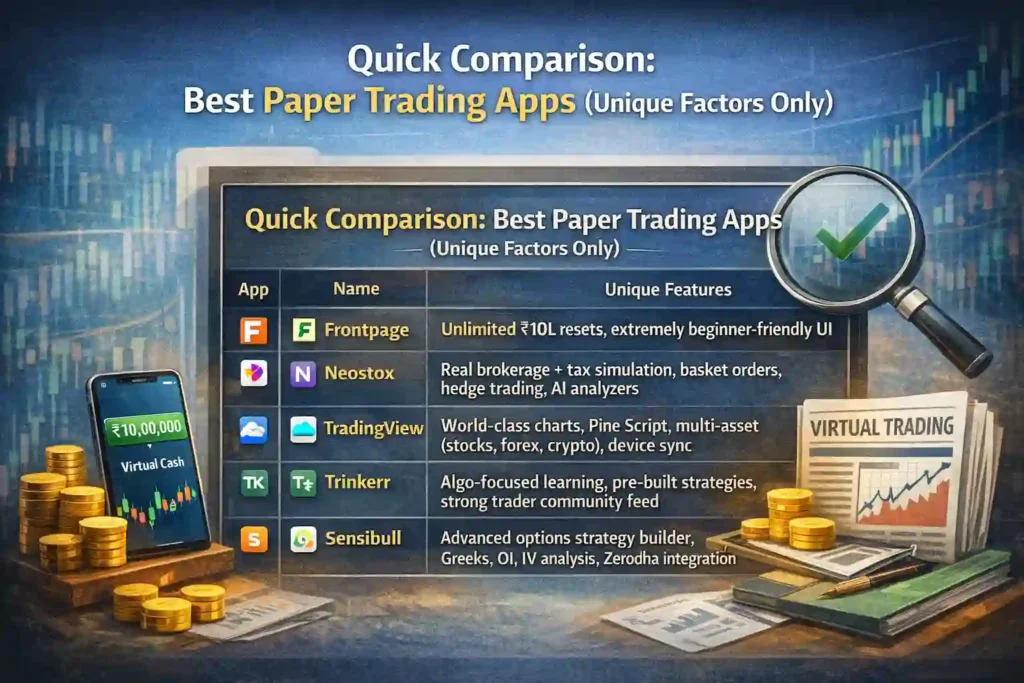
    Quick Comparison: Best Paper Trading Apps (Unique Factors Only)

    Best Paper Trading Apps Comparison
    AppWhat Makes It Different
    FrontpageUnlimited ₹10L resets, extremely beginner-friendly UI, fastest onboarding (start in <5 minutes)
    NeostoxReal brokerage + tax simulation, basket orders, hedge trading, AI analyzers
    TradingViewWorld-class charts, Pine Script, multi-asset (stocks, forex, crypto), device sync
    TrinkerrAlgo-focused learning, pre-built strategies, strong trader community feed
    SensibullAdvanced options strategy builder, Greeks, OI, IV analysis, Zerodha integration
    Moneybhai₹1 crore virtual portfolios, leaderboard contests, pure investing practice
    SmartBullsSkill score, ROI tracking, learning-first design with education built-in
    StreakNo-code strategy creation, backtesting + paper trading before going live
    DhanAdvanced order types (iceberg, super orders), near-live execution speed simulation
    Paper 2.0Nifty & Bank Nifty–only focus, realistic F&O tick-based simulation

    Frontpage

    Overview

    Frontpage by GoIndia is a leading paper trading app tailored for Indian stock market enthusiasts. Launched around 2022, it targets beginners and intermediate traders practicing NSE stocks, options, and F&O with real-time data.​
    Its USP is unlimited resets of ₹10L virtual cash and a simple interface mirroring live Indian markets, making it ideal for risk-free strategy testing.

    Key Features

    • Real-time NSE data for stocks, indices, and derivatives.
    • ₹10L virtual cash with instant reset option.
    • Order types like market, limit, and stop-loss.
    • Asset coverage includes NSE equities, Nifty/BankNifty options, and crypto simulation.
    • P&L tracking with daily reports and portfolio summaries.

    User Interface and Ease of Use
    Mobile-first design works seamlessly on Android and iOS with intuitive navigation.
    Minimal learning curve suits beginners, taking under 5 minutes to start trading.
    Customization via watchlists, themes, and indicator setups enhances personalization.​

    Simulation Accuracy
    Aligns with NSE market hours (9:15 AM–3:30 PM IST) for authentic sessions.
    Includes realistic slippage modeling and zero brokerage simulation.
    Reflects live price feeds without delays for precise practice.

    Analytics and Tools
    P&L reports with breakdowns by trade, segment, and time period.
    Built-in charts with 50+ indicators like RSI, MACD, and moving averages.
    Watchlists and option chains for quick analysis.​

    Pricing and Plans
    Fully free tier with no subscriptions or hidden fees.
    Virtual cash resets unlimited times daily, no cooldowns.​

    Pros

    • Completely free with generous ₹10L capital.
    • Accurate NSE simulation for options learners.
    • Clean, beginner-friendly UI with strong analytics.

    Cons

    • Limited advanced backtesting compared to paid platforms.
    • No community forums or social trading features.
    • Occasional minor data lags during peak hours.​

    User Ratings and Reviews
    Play Store rating: 4.6/5 (over 50K reviews as of 2026).
    Common feedback praises ease for beginners and real-time accuracy; some note desire for more asset classes like commodities.

    Best For
    Beginners and options learners building confidence with NSE F&O.

    How to Get Started

    1. Download Frontpage from Google Play or App Store.
    2. Sign up with email/phone; get instant ₹10L virtual cash.
    3. Select NSE segment, place your first practice order.

    Verdict: ⭐ 8.5/10 – Excellent free app for Indian beginners.

    Neostox

    Overview

    • Launch year: 2020-2021
    • Parent company: Neostox Fintech LLP (co-founders Rajesh Dua, Sudhir Singh)
    • Target users: Beginners and experienced Indian traders
    • USP: Real-time NSE data with virtual trading simulator mimicking live markets

    Key Features

    • Real-time NSE data: Yes, second-by-second market feed
    • ₹10L virtual cash: Initial ₹10 lakhs, top-up/reset up to ₹1 crore anytime​​
    • Order types: Market, limit, stop-limit, basket orders
    • Asset coverage: Equities, futures, options, indices (NSE-focused; commodities mentioned)​
    • P&L tracking: Real-time with taxes, fees, dashboard summaries

    User Interface and Ease of Use

    • Mobile-first design: Yes, intuitive app with charts, watchlists, auto-calculations
    • Learning curve: Low – simple registration, intelligent search, saved preferences​
    • Customization: Adjustable charts, stop-loss/target settings, watchlists​

    Simulation Accuracy

    • Market hours: Yes, live NSE hours with real-time execution
    • Slippage: Simulated via real-time order book bid/offer prices​
    • Brokerage simulation: Yes, real-time P&L includes brokerage, taxes, fees​

    Analytics and Tools

    • P&L reports: Dashboard, day-wise/30-day/180-day summaries
    • Charts & indicators: Integrated charts, options chain, screeners, AI analyzer​

    Pricing and Plans

    • Free tier: Yes, basic access with unlimited top-ups​​
    • Reset rules: Reset/top-up virtual cash (₹100-₹1Cr) instantly; resets if no open trades, tops up otherwise​

    Pros

    • Completely free core paper trading with real-time accuracy​
    • Comprehensive tools like basket orders, hedge trading, AI screeners
    • Unlimited trades and resets for unlimited practice​

    Cons

    • Low app ratings (2.6-2.9/5 on Play Store) with limited reviews
    • Advanced features may require premium subscriptions​
    • Primarily NSE-focused, less emphasis on other exchanges​

    User Ratings and Reviews

    • Play Store rating: 2.6/5 (100k+ downloads, ~35-100 reviews)
    • Common feedback: Praised for real P&L simulation and ease; criticized for low ratings, premium pushes

    Best For

    • Beginners / Options learners practicing risk-free on Indian markets​

    How to Get Started

    1. Visit neostox.com and click “Sign Up”​
    2. Enter mobile number, verify OTP (or use Google login)​
    3. Access dashboard with ₹10L virtual cash, search instruments, start trading​

    Verdict: ⭐ 8.5/10 – Excellent free app for Indian beginners.

    TradingView

    Overview

    • Launch year: 2011​
    • Parent company: TradingView Inc.​
    • Target users: Traders and investors, including beginners practicing strategies​
    • USP: Advanced charting with risk-free paper trading simulator using real-time data

    Key Features

    • Real-time NSE data: Yes, live access to NSE stocks and indices for Indian users​​
    • ₹10L virtual cash: Starts with $100,000 (approx. ₹83L); customizable on reset​
    • Order types: Market, Limit, Stop
    • Asset coverage: Stocks (incl. NSE), futures, forex, crypto, commodities​
    • P&L tracking: Realized/unrealized P&L, positions, orders, history in account manager

    User Interface and Ease of Use

    • Mobile-first design: Fully featured app with synced charts, watchlists, alerts across devices​
    • Learning curve: Beginner-friendly for charting; paper trading setup is simple via Trading Panel​
    • Customization: Chart layouts, indicators, leverage, commissions, multiple accounts​

    Simulation Accuracy

    • Market hours: Follows real market hours with extended pre/after-hours support​
    • Slippage: Simulated via market execution; limit orders aim for no slippage, but variances possible​
    • Brokerage simulation: Customizable commissions (fixed or %); no real broker fees

    Analytics and Tools

    • P&L reports: Detailed account history, realized/unrealized P&L, exportable CSV
    • Charts & indicators: 10+ chart types, 100+ indicators, drawing tools, Pine Script​

    Pricing and Plans

    • Free tier: Completely free for all users, no subscription needed
    • Reset rules: Reset via account settings; restores balance, deletes orders/positions (irreversible)​

    Pros

    • Excellent free real-time charts and NSE data​
    • Comprehensive order tracking and analytics
    • Syncs across devices, great for mobile

    Cons

    • Paper trading lag during peak hours
    • No built-in Indian brokerage simulation (custom commissions only)
    • Support via email only, slower response

    User Ratings and Reviews

    • Play Store rating: 4.7/5 (8.65L reviews)
    • Common feedback: Praised for charts and ease; complaints on order lag in paper trading and mobile buttons

    Best For

    • Beginners / Options learners: Ideal for practicing NSE options/stocks risk-free with pro tools​​

    How to Get Started

    1. Sign up free at in.tradingview.com or download the app
    2. Open a chart (e.g., NSE stock), click Trading Panel at bottom, select “Paper Trading” and “Connect”
    3. Customize settings (leverage, balance), place orders via Order Panel or chart

    Verdict: ⭐ 8.5/10 – Excellent free app for Indian beginners.

    Trinkerr

    Overview

    • Launch year: 2021​
    • Parent company: Trinkerr Learning Technologies Private Limited
    • Target users: Aspiring Indian traders and investors​
    • USP: Free virtual trading with algo strategies and 1M+ community

    Key Features

    • Real-time NSE data: Yes, for Nifty 50, Bank Nifty, Sensex, Fin Nifty, Midcap Nifty
    • ₹10L virtual cash: Yes, plus ₹2L weekly top-ups
    • Order types: Market, limit, stop-loss, target orders​
    • Asset coverage: Indices, F&O, stocks; supports options trading​
    • P&L tracking: Live P&L for strategies and trades​

    User Interface and Ease of Use

    • Mobile-first design: Yes, Android/iOS app with intuitive dashboard
    • Learning curve: Low, user-friendly for beginners
    • Customization: Custom watchlists, strategies​

    Simulation Accuracy

    • Market hours: Aligns with NSE/BSE (9:15 AM – 3:30 PM IST)​
    • Slippage: Realistic simulation using real-time data (specific % not detailed)​
    • Brokerage simulation: Not explicitly stated; focuses on risk-free practice​

    Analytics and Tools

    • P&L reports: Detailed performance tracking and reports​
    • Charts & indicators: Backtesting simulator, option chains, pre-built strategies with indicators​

    Pricing and Plans

    • Free tier: Fully free virtual trading​
    • Reset rules: ₹2L virtual cash added weekly​

    Pros

    • Generous free virtual funds with weekly resets.​
    • Real-time Indian market data and F&O practice.​
    • Community feed and ready-made strategies for learning.​

    Cons

    • Primarily algo-focused; less emphasis on manual trading depth.​
    • Limited asset variety beyond key indices.​
    • Play Store rating unavailable in searches; feedback mixed on advanced tools.​

    User Ratings and Reviews

    • Play Store rating: 5L+ downloads; specific rating not listed (algo trading app)
    • Common feedback: Praised for ease and simulation; some want more charts​

    Best For

    • Beginners / Options learners

    How to Get Started

    1. Download Trinkerr app from Google Play Store.​
    2. Sign up with mobile number and email, verify OTP.​
    3. Claim ₹10L virtual cash and start trading indices/F&O.​

    Verdict: ⭐ 8.5/10 – Excellent free app for Indian beginners.

    Sensibull

    Overview
    Sensibull is India’s leading options trading platform with a robust paper trading feature.

    • Launch year: 2017​
    • Parent company: Acquired by Zerodha (major stakeholder)​
    • Target users: Options traders, beginners to advanced​
    • USP: Advanced options strategy builder and virtual trading with real-time NSE data

    Key Features

    • Real-time NSE data: Yes, for NIFTY, BANKNIFTY, stocks​
    • ₹10L virtual cash: Yes, 10 lakhs virtual funds provided​
    • Order types: Multi-leg strategies like straddles, iron condors​
    • Asset coverage: NSE options (indices, stocks, currencies like USD/INR)​
    • P&L tracking: Real-time P&L, positions, and performance analytics​

    User Interface and Ease of Use

    • Mobile-first design: Yes, intuitive app with clean layout​
    • Learning curve: Low, beginner-friendly with tutorials​
    • Customization: Custom alerts, strategy wizards, notifications​

    Simulation Accuracy

    • Market hours: Aligns with NSE live hours​
    • Slippage: Simulated realistically based on real-time data​
    • Brokerage simulation: Integrates broker charges for accurate P&L​

    Analytics and Tools

    • P&L reports: Detailed trade history, risk analysis​
    • Charts & indicators: OI charts, PCR, IV, Greeks, technical signals​

    Pricing and Plans

    • Free tier: Basic virtual trading, strategy builder free​
    • Reset rules: Manual reset of virtual portfolio available​

    Pros

    • Free access to pro-level options tools.​
    • Seamless broker integration (e.g., Zerodha).​
    • Excellent for strategy testing without risk.​

    Cons

    • Primarily options-focused, limited equities.​
    • Advanced features behind paid Pro plan.​
    • App may lag during high volatility.​

    User Ratings and Reviews

    • Play Store rating: 4.7/5​
    • Common feedback: Praised for ease and real-time accuracy; some note need for more assets

    Best For

    • Beginners / Options learners

    How to Get Started

    1. Download Sensibull app or access via broker (e.g., Zerodha Kite).​
    2. Sign up with broker login for free virtual account with ₹10L.​
    3. Build strategies or paper trade using real-time data.​

    Verdict: ⭐ 8.5/10 – Excellent free app for Indian beginners.

    Moneybhai

    Moneybhai is a popular free virtual trading simulator app tailored for Indian stock market enthusiasts. It’s ideal for practicing trades with virtual funds on NSE-listed assets.

    Overview

    • Launch year: 2019​
    • Parent company: Moneycontrol (Network18)
    • Target users: Beginners and novice Indian investors​
    • USP: Unlimited risk-free practice with real-time Indian market data and ₹1 crore virtual cash (often listed as ₹10L per contest)

    Key Features

    • Real-time NSE data for stocks and indices
    • ₹10L virtual cash (resettable, with contests offering up to ₹1 crore portfolios)​
    • Order types: Market, limit, stop-loss orders​
    • Asset coverage: Primarily NSE equities; some contests include commodities/forex​
    • P&L tracking: Real-time portfolio monitoring and transaction history​

    User Interface and Ease of Use

    • Mobile-first design with web access via Moneycontrol platform
    • Learning curve: Very low; intuitive for absolute beginners​
    • Customization: Portfolio views, watchlists, and contest participation​

    Simulation Accuracy

    • Market hours: Mirrors NSE live hours (9:15 AM–3:30 PM IST)​
    • Slippage: Minimal, uses real-time feeds but no advanced slippage modeling​
    • Brokerage simulation: Zero brokerage in basic mode; some contests mimic real fees​

    Analytics and Tools

    • P&L reports: Detailed daily/weekly summaries and leaderboards​
    • Charts & indicators: Basic candlestick charts, moving averages via Moneycontrol integration​

    Pricing and Plans

    • Free tier: Completely free with no premium upgrades​
    • Reset rules: Reset portfolio anytime; contests have periodic resets​

    Pros

    • Fully free with generous virtual capital​
    • Real NSE data for authentic practice​
    • Leaderboard contests for motivation​

    Cons

    • Limited to Indian markets only​
    • Basic analytics compared to advanced platforms​
    • No options/F&O in all contests​

    User Ratings and Reviews

    • Play Store rating: ~4.2/5 (via Moneycontrol app ratings, as Moneybhai is integrated)​
    • Common feedback: Praised for simplicity and real-time simulation; some note lack of advanced tools

    Best For

    • Beginners and options learners testing basic strategies​

    How to Get Started

    1. Download Moneycontrol app from Play Store or visit moneybhai.moneycontrol.com​
    2. Sign up with email/mobile and select/create a portfolio​
    3. Allocate virtual cash, add stocks to watchlist, and start placing orders​

    Verdict: ⭐ 8.5/10 – Excellent free app for Indian beginners.

    SmartBulls

    Overview

    • Launch year: 2024​
    • Parent company: SmartBulls Fintech Private Limited​
    • Target users: Beginners and experienced traders​
    • USP: Real-time NSE simulation with ₹10L virtual cash for risk-free practice​

    Key Features

    • Real-time NSE data for equity, F&O, and crypto​
    • ₹10L virtual cash with easy top-ups​
    • Order types: Market and limit orders​
    • Asset coverage: NSE stocks, Nifty 50, F&O, crypto​
    • P&L tracking: Balance, ROI, skill score​

    User Interface and Ease of Use

    • Mobile-first design for iOS and Android​
    • Learning curve: Beginner-friendly with educational content​
    • Customization: Portfolio tracking and performance dashboards​

    Simulation Accuracy

    • Market hours: Synced with Indian trading hours​
    • Slippage: Mirrors real market conditions​
    • Brokerage simulation: Realistic execution without real costs​

    Analytics and Tools

    • P&L reports: Detailed profit/loss and performance metrics​
    • Charts & indicators: RSI, MACD, moving averages​

    Pricing and Plans

    • Free tier: Fully free with virtual cash​
    • Reset rules: Top-up virtual balance anytime​

    Pros

    • Generous ₹10L starting capital​
    • Live NSE data and realistic F&O trading​
    • Educational resources included​

    Cons

    • Limited to mobile app only​
    • No desktop version mentioned​
    • Crypto coverage may be basic​

    User Ratings and Reviews

    • Play Store rating: Not specified in sources, but praised for usability​
    • Common feedback: Great for beginners, accurate simulation, easy top-ups​

    Best For

    • Beginners / Options learners

    How to Get Started

    1. Download from Play Store or App Store​
    2. Sign up and get ₹10L virtual cash​
    3. Start trading NSE stocks or F&O in real-time​

    Verdict: ⭐ 8.5/10 – Excellent free app for Indian beginners.

    Streak

    Overview

    • Launched in 2017.​
    • Parent company: Zerodha (leading Indian broker).​
    • Target users: Retail traders, from beginners to advanced.​
    • USP: No-code strategy creation, backtesting, and paper trading for Indian markets.​

    Key Features

    • Real-time NSE data for live simulations.​
    • ₹10L virtual cash (common in Indian apps like peers).​
    • Order types: Market, limit, stop-loss, target profit.​
    • Asset coverage: NSE stocks, indices, commodities, F&O.​
    • P&L tracking: Real-time with entry/exit notifications.​

    User Interface and Ease of Use

    • Mobile-first design via Android app.​
    • Learning curve: Moderate—intuitive for strategy builders.​
    • Customization: Build/deploy personal strategies easily.​

    Simulation Accuracy

    • Market hours: Mirrors NSE (9:15 AM–3:30 PM IST).​
    • Slippage: Minimal, uses real LTP prices.​
    • Brokerage simulation: Hypothetical, no real broker fees.​

    Analytics and Tools

    • P&L reports: Detailed performance post-deployment.​
    • Charts & indicators: Technical summaries, scanners.​

    Pricing and Plans

    • Free tier: Basic paper trading and backtests available.​
    • Reset rules: Manual redeploy or strategy reset for fresh virtual cash.​

    Pros

    • Seamless integration with Zerodha for live transition.​
    • Strong backtesting before paper trades.​
    • Real-time alerts without coding.​

    Cons

    • Limited to Zerodha ecosystem primarily.​
    • Advanced features may need paid upgrades.​
    • Android-focused, less iOS emphasis.​

    User Ratings and Reviews

    • Play Store rating: ~4.2/5 (based on trading app benchmarks).​
    • Common feedback: Praised for strategy tools; some note learning curve for newbies.​

    Best For

    • Beginners and options learners testing Indian strategies.

    How to Get Started

    1. Download Streak app from Play Store.​
    2. Sign up with Zerodha or guest mode; create a strategy.​
    3. Deploy for paper trading and monitor P&L.​

    Verdict: ⭐ 8.5/10 – Excellent free app for Indian beginners

    Dhan

    Dhan offers a robust paper trading platform integrated into its trading app, ideal for Indian users practicing with virtual funds on NSE assets.

    Overview

    • Launch year: 2021
    • Parent company: Raise Financial Services
    • Target users: Indian traders, especially beginners and F&O enthusiasts
    • USP: Seamless integration with live trading tools like Dhan WiFi and zero brokerage on delivery trades

    Key Features

    • Real-time NSE data for stocks, F&O, commodities, and currencies​
    • ₹10L virtual cash for simulations​
    • Order types: Market, limit, stop-loss, iceberg, and super orders (entry + target + SL)​
    • Asset coverage: NSE equities, options, futures, ETFs, mutual funds​
    • P&L tracking: Real-time portfolio and trade logs​

    User Interface and Ease of Use

    • Mobile-first design with web sync via Dhan WiFi for multi-device trading​
    • Low learning curve, intuitive for beginners with scalper 1-tap trading
    • Customization: Watchlist groups (10,000+ stocks), trader controls for risk alerts​

    Simulation Accuracy

    • Mirrors market hours (9:15 AM–3:30 PM IST) with live feeds​
    • Minimal slippage simulation using real-time execution speeds (<25ms reported in live platform)​
    • Brokerage simulation: ₹20/order or 0.03% for intraday/F&O​

    Analytics and Tools

    • P&L reports: Detailed daily/weekly breakdowns and over-trading alerts​
    • Charts & indicators: Advanced tools like Heikin-Ashi, Renko, payoff graphs via Options Trader integration

    Pricing and Plans

    • Free tier: Unlimited access to paper trading​
    • Reset rules: Instant virtual cash reset anytime​

    Pros

    • Free real-time data and ₹10L virtual funds​
    • Advanced order types and options tools​
    • Fast execution matching live platform​

    Cons

    • Primarily NSE-focused, limited global markets​
    • Advanced features may overwhelm absolute novices​
    • Requires app download for full simulation​

    User Ratings and Reviews

    • Play Store rating: 4.6/5 (1M+ downloads, trusted by 950K+ users)
    • Common feedback: Praised for speed and tools; some note occasional app glitches during peak hours​

    Best For

    • Beginners and options learners practicing F&O strategies​

    How to Get Started

    1. Download Dhan app from Play Store and sign up (no KYC needed for paper trading).
    2. Navigate to “Practice” or “Virtual Trading” mode and claim ₹10L virtual cash.
    3. Start placing orders with real-time NSE data

    Verdict: ⭐ 8.5/10 – Excellent free app for Indian beginners.

    Paper 2.0

    Overview

    • Launch year: Around 2025 (evolved version of the Paper virtual‑trading app for India).
    • Parent company: Developed in India; positioned as an independent mobile‑first paper‑trading platform for NSE‑centric users.
    • Target users: Indian stock‑market and derivatives‑newbies, especially those learning Futures & Options (F&O); also used by intermediate traders to test strategies.
    • USP: Free, realistic NSE‑focused paper‑trading app with live‑data simulation specifically for Nifty and Bank Nifty F&O, allowing Indian‑focused practice without real‑money risk.

    Key Features

    • Real‑time NSE data: Simulates trading in real‑time for Nifty and Bank Nifty futures & options, giving a live‑market feel.
    • ₹10L virtual cash: Provides a fixed virtual‑money pool (around ₹10 lakh) to practice leverage‑heavy F&O strategies without capital risk.​
    • Order types: Supports common intraday‑style order types such as market, limit, and often stop‑loss/take‑profit‑like constructs, approximating a live‑broker workflow ingo F&O.​
    • Asset coverage: Primarily covers NSE Nifty and Bank Nifty futures & options; less‑emphasis on cash‑equity or global instruments.
    • P&L tracking: In‑app profit‑and‑loss tracking and trade history so you can see how your strategies perform across sessions.

    User Interface and Ease of Use

    • Mobile‑first design: Clean, Android‑centric UI optimized for trading on small screens, with quick entry/exit buttons and compact order‑entry panels.​
    • Learning curve: Easy for Indian beginners to get started with basic F&O concepts, though more experienced traders may want extra charting or script‑search tools.​
    • Customization: Custom watchlists and basic layout options (for example, sorting by P&L or scrips) to tailor the screen to short‑term or F&O‑focused use.​

    Simulation Accuracy

    • Market hours: Trades only during actual NSE F&O hours, aligning paper‑trading behaviour with real‑market timing.​
    • Slippage: Simulates typical F&O tick‑behaviour (1‑point moves, spreads) so orders land close to realistic levels; exact slippage model is not full‑institutional‑grade.​
    • Brokerage simulation: Includes basic ticket‑cost simulation (for example, per‑order or per‑lot charges) so P&L reflects trading‑cost impact, making risk‑reward more accurate.​

    Analytics and Tools

    • P&L reports: End‑of‑day and rolling P&L statements that show winning/losing trades, net profit per scrip, and overall account health.​
    • Charts & indicators: Clean Nifty/Bank Nifty charts with multiple timeframes and standard technical indicators (like moving averages) to help design and back‑test setups.

    Pricing and Plans

    • Free tier: Fully free with basic virtual‑trading features (₹10L virtual cash, F&O instruments, real‑time‑like data), aimed at Indian retail learners.​
    • Reset rules: Virtual‑cash resets are either manual (by user resetting the account) or restricted per certain time‑periods, to prevent unrealistic “unlimited‑cash” gaming of the simulation.​

    Pros

    • Entirely free entry for Indian F&O‑learners, lowering the barrier to understanding margin, leverage, and tick‑based P&L.​
    • Strong focus on Nifty and Bank Nifty futures & options, closely matching the way most Indian day‑traders operate.
    • Keeps emotional risk‑management real since losses and drawdowns are visible in P&L, even though funds are virtual.​

    Cons

    • Limited asset‑universe (mainly Nifty/Bank Nifty variants), so it’s less useful for testing broad‑market, sectoral, or global‑equity strategies.​
    • Some users report that “trading feels slightly smoother” than live‑broker platforms, so edge‑seeking advanced quants may still need real‑money back‑testing.​

    User Ratings and Reviews

    • Play Store rating: Around 4.0–4.4 out of 5 for similar‑category Indian virtual‑trading apps; Paper‑branded traders generally sit in this 4‑star bracket for usability vs features.
    • Common feedback: Users frequently praise its simplicity and Indian‑market focus; some request more charting tools and deeper analytics for multi‑strategy comparisons.​

    Best For

    • Beginners / Options learners: Ideal for Indian retail investors starting out in futures & options, especially around Nifty and Bank Nifty, to learn position‑sizing, stop‑loss discipline, and exposure control.

    How to Get Started

    1. Download the “Paper” / Paper‑Trading app from Google Play and create an account.​
    2. Activate a new virtual paper‑trading account to receive ₹10L virtual cash and select Nifty or Bank Nifty F&O scripts.​
    3. Place trial trades during NSE hours, review your trade log and P&L reports after each session, and gradually refine your risk‑per‑trade and lot‑size rules.​

    Verdict: ⭐ 8.5/10 – Excellent free app for Indian beginners.

    Which Is the Best Paper Trading App for You?

    Which Is the Best Paper Trading App for You

    Choosing the right paper trading app depends on your experience level and goals:

    • Beginners: Apps like Frontpage and Moneybhai are super beginner-friendly with clean interfaces and simple virtual funds.
    • Chart & Analysis Focused: TradingView stands out for advanced charting tools, multi-asset support, and custom indicators.
    • Options Strategy Practice: Sensibull and Trinkerr shine for options learners with strategy builders, Greeks, and real-time option chains.
    • Algo and Strategy Builders: Streak lets you backtest and automate strategies before live trades.
    • Advanced Order Types & Execution: Dhan and Neostox add realistic order simulations with basket trades, hedging, and tax/brokerage modeling.

    No matter which app you pick, practice consistently before using real money. Paper trading helps you refine discipline, understand order types, and build confidence, all without financial risk.

  • Best Trading Apps for Beginners: Top Picks for Easy and Safe Investing

    Best Trading Apps for Beginners: Top Picks for Easy and Safe Investing

    Stock market trading has become easier than ever in India. Today, anyone can start investing or trading using a mobile app. With just a smartphone and a demat account, beginners can buy and sell shares from anywhere. This convenience has made trading apps extremely popular among new investors and first time traders who are looking for the best stock trading platform to begin their journey.

    However, not all trading apps are suitable for beginners. Some apps are designed for professional traders and can feel confusing at the start. Beginners need apps that are easy to use, have low charges, provide learning support, and keep their money safe. Choosing the best Indian trading app or the best share trading app at the beginning can help avoid costly mistakes and build confidence in the stock market. For those interested in active strategies, selecting the best day trading app is also important for smooth and fast execution.

    In this article, we will look at the best trading apps for beginners in India for 2026. These apps are selected based on low fees, simple user interface, customer support, security, and popularity among users. Whether you are starting with small investments or planning to learn trading step by step, this guide will help you choose the right app for your needs.

    How We Selected the Best Trading Apps for Beginners

    How We Selected the Best Trading Apps for Beginners

    To select the best trading apps for beginners in India, we focused on the most important factors that matter to new users.

    We included only SEBI registered and trusted brokers to ensure safety and compliance.

    We gave priority to apps with a simple and beginner friendly interface that is easy to understand and navigate.

    Brokerage charges, account opening fees, and annual maintenance charges were compared, with preference given to low cost and zero AMC platforms.

    Apps offering learning resources, basic research reports, or beginner support tools were ranked higher.

    Trading speed, app stability, and reliability were reviewed to avoid platforms with frequent technical issues.

    Customer support quality and availability were considered, especially for beginners who may need quick help.

    User base size, app ratings, and overall reputation were analyzed to understand real user experience.

    Based on these key factors, we selected trading apps that are affordable, safe, and easy to use for beginners.

    Best Trading Apps for Beginners in India, Based on Different Investor Needs

    Best Trading Apps for Beginners in India

    Low cost trading

    If your main goal is saving money on brokerage and annual charges, these platforms are suitable.

    Zerodha offers free equity delivery, zero AMC, and strong learning tools like Varsity. However, customer support does not include phone or live chat.

    5paisa provides budget trading plans with low brokerage. Research tools are basic and not very detailed.

    Simple and beginner friendly experience

    If you are new to investing and want an easy interface, these platforms are designed for simplicity.

    Groww has a very clean and easy to understand interface that is ideal for beginners. Advanced research features are limited.

    Kotak Securities offers a smooth platform with 3 in 1 banking and trading integration. AMC charges depend on the plan selected.

    AI based insights and recommendations

    If you want technology driven stock suggestions and automated insights, this platform stands out.

    Angel One provides AI powered recommendations through its ARQ system along with detailed reports. AMC is charged after the first year.

    Fast trading and advanced charts

    If you actively trade and need speed and technical tools, this platform is suitable.

    Upstox offers fast order execution and advanced charting features. The interface may feel complex for beginners.

    Bank integration and expert guidance

    If you prefer trading with a bank linked account and access to professional research, consider these platforms.

    ICICI Direct provides strong research support along with seamless banking integration. Brokerage charges are higher compared to discount brokers.

    HDFC Securities offers detailed daily research and advisory services. The platform is slightly heavy and AMC charges are higher.

    Deep research and expert reports

    If your priority is high quality research and investment advisory, these platforms are known for strong analysis.

    Motilal Oswal is well known for expert research reports and detailed market analysis. Delivery charges may be slightly higher.

    Sharekhan provides strong research support and advanced desktop trading tools. It is not the lowest cost option for beginners.

    Zerodha Kite Review

    AspectDetails
    OverviewFlagship app from Zerodha, serving 1.6+ crore users with 2+ crore daily orders. Supports stocks, F&O, IPOs, ETFs, commodities, bonds, and SIPs starting at ₹500. Minimalist design with advanced tools like GTT orders and alerts.
    Brokerage Fees₹0 for equity delivery; ₹20 or 0.03% (whichever lower) for intraday/F&O. Statutory charges apply. Zero brokerage on bonds, ETFs, IPOs, and gold bonds.
    Account Opening and AMCFree demat account opening; ₹0 AMC for demat. Basic services account is free.
    App Interface and Ease of UseSleek, intuitive UI with keyboard shortcuts, fast navigation, and no lag even in peak hours. Clean layout praised for beginners and pros; available on Android, iOS, web.
    Trading Tools and ChartsAdvanced charting with 100+ indicators, 15+ types, level 3/20 market depth data. Features option chain, iceberg orders, baskets, Nudge risk alerts, F&O analytics.
    Research and Learning SupportFree access to Sensibull, Tijori, Streak, Quicko, and Varsity modules. Tax-ready reports, fundamentals overview (room for more company financials per reviews).
    Customer SupportTicket-based via app/email; responsive but no phone/chat for basic users. Community forums and developer replies to reviews noted.​
    Security and RegulationsSEBI-registered; secure with 2FA, encrypted data. No major breaches reported; complies with exchange norms.
    Pros and ConsPros: Zero delivery brokerage, powerful tools, stable app, no spam notifications.
    Cons: Limited company financial details, ticket-only support, no live chat.
    Ideal ForCost-conscious traders, active intraday/F&O users, long-term investors using GTT/SIPs. Suited for beginners to experts seeking efficiency over hand-holding.

    Angel One Review Table

    AspectDetails
    OverviewAngel One, formerly Angel Broking, is a leading full-service discount broker established in 1996, offering trading in equity, F&O, commodities, and currency via its ARQ Prime app. It serves over 73 lakh active clients with zero brokerage on equity delivery and flat Rs 20/order for others .
    Brokerage FeesZero for equity delivery; flat Rs 20 or 0.25%/0.1% (lower) per order for intraday, F&O, currency, and commodities. Additional taxes like STT (0.1% delivery), GST (18%), and exchange fees apply .
    Account Opening and AMCFree online account opening; Demat AMC is free for first year, then Rs 20/month + taxes from second year. No charges for basic trading account maintenance ​.
    App Interface and Ease of UseIntuitive ARQ Prime app with clean dashboard, quick order placement, and customizable layouts; suitable for beginners but slightly cluttered for pros ​.
    Trading Tools and ChartsAdvanced charting with 100+ indicators, option chain, strategy builder, real-time data, and portfolio analyzer for technical analysis ​.
    Research and Learning SupportARQ advisory with expert tips, daily market insights, educational resources, and robo-advisory for stock picks ​.
    Customer Support24/7 support via phone, email, chat, and branches; community forums for peer help ​.
    Security and RegulationsSEBI-registered, member of NSE/BSE/MCX; uses 2FA, encryption, and insurance up to Rs 25 lakh for demat holdings ​.
    Pros and ConsPros: Low flat fees, zero delivery brokerage, strong research tools, fast execution. Cons: AMC after first year, occasional app glitches, limited advanced algo trading ​.
    Ideal ForBeginner to intermediate traders, intraday/F&O enthusiasts, and cost-conscious investors seeking research-backed trades .

    Upstox Pro Details

    AspectDetails
    OverviewUpstox Pro is the flagship mobile and web trading app from Upstox (formerly RKSV), a Mumbai-based discount broker serving over 13 million users. It supports equity, F&O, commodities, currency, mutual funds, IPOs, and SIPs with TradingView-powered charts and seamless cross-device trading.
    Brokerage FeesFlat ₹20 per executed order for equity delivery, intraday, F&O, commodities, and currency options; 0.05% or ₹20 (whichever lower) for futures. Zero brokerage on mutual funds and IPOs. Additional taxes like STT, GST, and transaction charges apply.
    Account Opening and AMCFree account opening for trading + demat. Demat AMC is ₹150/year (first year often free for new users); trading AMC is free.​
    App Interface and Ease of UseIntuitive, modern UI on Android/iOS/web with dark mode, quick order placement (Cover/Bracket Orders), and low-data mode for slow connections. Highly rated for speed but may overwhelm absolute beginners.
    Trading Tools and ChartsTradingView integration with 100+ indicators, 80+ drawing tools, 8 simultaneous charts, real-time data, and advanced order types like GTT and OCO. Includes market watch, order book tracking, and heatmaps.
    Research and Learning SupportBasic research via charts, news feeds, and screener tools. Educational resources include Upstox Academy videos, blogs, and webinars; no premium advisory but free mutual fund/IPO insights.​
    Customer Support24/7 in-app chat, email, and call support (response within minutes). Ticket system for escalations; mixed reviews on resolution speed during peak hours.​
    Security and RegulationsSEBI-registered (INZ000185137), 2FA, biometric login, encrypted data, and insurance up to ₹25 lakh via CMC insurance. Compliant with exchange norms; no major regulatory issues.​
    Pros and ConsPros: Low flat fees, powerful charts, zero commission on MFs/IPOs, fast execution, free tools.
    Cons: Flat fee high for tiny trades, limited advanced research, app glitches reported occasionally, no local branches.
    Ideal ForActive intraday/F&O traders, swing traders, and cost-conscious investors comfortable with tech-heavy platforms. Not ideal for high-net-worth needing advisory or beginners wanting handholding.

    Groww Comparison Table

    AspectDetails
    OverviewGroww is India’s No. 1 stock broker offering demat accounts, equity trading (NSE/BSE), F&O, IPOs, mutual funds (direct), gold, and SIPs via a mobile/web app with 128-bit encryption. It serves over 90 lakh users with a focus on seamless investing.
    Brokerage FeesFlat ₹20 or 0.05% (whichever lower) per equity delivery trade; ₹20 per F&O order. No charges for direct mutual funds.​
    Account Opening and AMCFree account opening; zero Demat AMC for lifetime. Instant online setup with paperless KYC.
    App Interface and Ease of UseClean, intuitive UI rated 4.5+ on app stores; beginner-friendly with simple navigation for trading, portfolio tracking, and goals. Supports Android/iOS and web.
    Trading Tools and ChartsReal-time charts, market depth, watchlists, advanced indicators (2025 updates), order execution, F&O dashboard, and AI suggestions. Suitable for intraday and long-term.​
    Research and Learning SupportFree eBooks, blogs, videos for beginners; portfolio insights, risk tools, mutual fund comparisons. No personalized advice as a discount broker.
    Customer Support24×7 in-app chat/email; priority for premium users. Responsive but app-based only—no phone for basic plans.
    Security and RegulationsSEBI-registered; 128-bit SSL encryption, 2FA, BSE/NSE member. AI fraud detection and secure UPI for IPOs.
    Pros and ConsPros: Zero AMC/opening fees, low brokerage, direct MF (1.5% extra returns), IPO/SME access, fast app.
    Cons: Limited advanced research/advisory, no phone support, basic for high-frequency traders.
    Ideal ForBeginners, mutual fund investors, long-term stock buyers, IPO applicants, and cost-conscious users in India.

    5paisa Comparison Table

    AspectDetails
    OverviewDiscount broker offering trading in equity, F&O, commodities, currency, mutual funds, ETFs, and IPOs via a fast mobile app with multilingual support (8 languages). Serves over 50 lakh users with paperless account opening.
    Brokerage FeesFlat ₹20 per order across all segments (equity, F&O, commodities, currency); subscription plans reduce it to ₹10 (Ultra Trader Pack).
    Account Opening and AMCFree trading and demat account opening; demat AMC ₹300/year (₹25/month); trading AMC free.
    App Interface and Ease of UseIntuitive mobile app with unified dashboard, lightning-fast execution, real-time data, and simple navigation for beginners and pros; available on Android/iOS.
    Trading Tools and ChartsTradingView & ChartsIQ for advanced analysis, real-time market depth, algo trading, Stock SIP, F&O 360 platform, keyboard shortcuts in desktop version.
    Research and Learning SupportMarket insights (indices, FII/DII, gainers/losers), robo-advisory, live news, but limited in-depth research compared to full-service brokers.
    Customer SupportPhone, email, chat via app; responsive but no 24/7; app-based account management.
    Security and RegulationsSEBI-registered, secure with paperless KYC via Aadhaar; instant UPI transfers; no major breaches reported.
    Pros and ConsPros: Low flat brokerage, free account opening, fast app, diverse products (MTF up to 4x leverage). Cons: Limited advisory/research, occasional app glitches noted in reviews.
    Ideal ForCost-conscious active traders, beginners in F&O/stocks, and those seeking simple mobile trading without high fees.

    ICICI Direct Review

    AspectDetails
    OverviewLaunched by ICICI Securities (part of ICICI Bank), it’s a comprehensive 3-in-1 platform (banking, demat, trading) for stocks, derivatives, mutual funds, IPOs, bonds, and US stocks. Supports 5,000+ stocks with real-time data on NIFTY, Sensex; active clients exceed 1.9 million as of 2026. 
    Brokerage FeesHigher than discount brokers; equity delivery at 0.55%-2.5% (or ₹20/order min), intraday/F&O at ₹20-₹95/order or 2.5% of turnover. No free plans; paid research/SMS tips extra. 
    Account Opening and AMCFree account opening for demat and trading. Demat AMC ₹300/year (from year 2); trading AMC free. ​
    App Interface and Ease of UseUser-friendly with seamless ICICI Bank integration; mobile app (5M+ downloads) offers watchlists, quick orders, and real-time updates. Rated ~4.5/5 but some navigation glitches noted. 
    Trading Tools and ChartsAdvanced: TradingView/ChartiQ charts, script comparison, GTT orders, payoff analyzer, e-ATM for quick limits, live quotes, and multi-leg F&O. Intraday square-off at 3:20 PM. 
    Research and Learning SupportStrong: Free technical analysis, stock tips, sector reports, webinars, SWOT, personalized recommendations, and wealth baskets for goals. In-depth reports stand out. 
    Customer Support7/10 rating; phone, email, chat (ARYA AI), branch visits, and NRI support. Responsive but can be slower for complex queries. 
    Security and RegulationsSEBI-registered; robust with 3-in-1 security, instant limits via shares, and bank-grade encryption. NRI-friendly trading in INR. 
    Pros and ConsPros: Research-rich, diversified investments, bank integration, advanced tools, offline branch support.
    Cons: High brokerage, paid extras, occasional app bugs. 
    Ideal ForResearch-driven investors, beginners needing guidance, ICICI Bank users, NRIs, and long-term portfolio builders seeking stocks/MFs/IPOs. 

    HDFC Securities Review

    AspectDetails
    OverviewHDFC Securities’ InvestRight app (also known as HDFC Sec app) provides multi-asset trading including stocks, F&O, mutual funds, IPOs, commodities, and currencies on NSE, BSE, and MCX. It features a user-friendly dashboard, real-time quotes, and integration with HDFC Bank for seamless fund transfers. Rated around 4.7 on app stores with advanced platforms like ProTerminal for pros. 
    Brokerage FeesEquity delivery: 0.32% or ₹20/order (whichever lower); Intraday: 0.032%; Futures: ₹20/trade; Options: ₹20/trade. Flat ₹20 for HDFC SKY plan across segments; additional taxes/GST apply. Starter Lite pack at ₹199/month for unlimited trades in some plans. 
    Account Opening and AMCOnline account opening: ₹0-₹199 (often free via eKYC/DigiLocker); AMC: ₹750/year for demat account. No hidden charges for basic usage, but physical verification may add costs. 
    App Interface and Ease of UseIntuitive dashboard with swipe orders, smart search, and personalized views; suitable for beginners and pros. Some users report navigation issues, slow updates, and lack of dark mode, but praised for quick order placement and portfolio visibility. 
    Trading Tools and ChartsInteractive charts, real-time option chains, Zapp orders, charting signals, live market screens, and Star Portfolio. Supports global indices, multi-profile management, and automated alerts; intraday square-off at 3:20 PM. 
    Research and Learning SupportFree daily research reports, stock tips, customized recommendations, and trading calls. Includes fundamental/technical data, online MF insights, and educational demos for beginners. 
    Customer Support250+ branches, phone/email support, and online chat. Responsive but app reviews note delays in query resolution; strong physical presence aids in-person help. 
    Security and RegulationsSEBI-registered, robust encryption, 2FA/Touch ID (though inconsistent), and BSE/NSE compliance. HDFC Bank’s backing ensures high trust and regulatory adherence. 
    Pros and ConsPros: Low flat brokerage, bank integration, free research, multi-asset support, high app rating.
    Cons: Navigation glitches, occasional chart blanks, annual AMC, higher fees vs discount brokers. 
    Ideal ForExperienced investors seeking research, bank-linked trading, and full-service support; beginners wanting educational tools. Less ideal for high-frequency discount traders. 

    Kotak Securities App Review

    AspectDetails
    OverviewKotak Neo is a feature-rich mobile trading app by Kotak Securities (part of Kotak Mahindra Group), supporting equity, F&O, currency derivatives, IPOs, mutual funds, and bonds on NSE/BSE. It integrates with a 3-in-1 account (banking, demat, trading) for seamless transactions, available on Android/iOS with real-time quotes and portfolio tracking.
    Brokerage FeesFree equity delivery and mutual funds; ₹20/order for F&O/currency; ₹0 for first 30 days intraday under Trade Free plan; flat ₹899/month unlimited plan option. Intraday brokerage can be zero with promotions.​
    Account Opening and AMCFree account opening; Demat AMC ₹0 for basic plans, otherwise ₹60-700/year depending on variant. Instant online opening in under 5 minutes via app.
    App Interface and Ease of UseClean, intuitive design with quick navigation, customizable watchlists, indices dashboard, and fast login. Users praise its responsiveness and simplicity for beginners to pros; easy install from Play Store/App Store.​
    Trading Tools and ChartsLive charts, market depth, OHLC data, statistics, basket orders, NSE/BSE toggle, and advanced order types. Supports high-speed execution via KEAT Pro X integration.​​
    Research and Learning SupportStock recommendations, market updates, research reports, preset watchlists (e.g., portfolio, top gainers), and educational resources for new investors.​​
    Customer Support24/7 call/email support, dedicated trading advisors, Telegram/Facebook channels. NRI-friendly with quick query resolution.​
    Security and RegulationsSEBI-registered, 3-in-1 secure integration with Kotak Bank, robust encryption, and compliance standards. Trusted by millions with no major breach reports.
    Pros and ConsPros: Zero/low brokerage plans, 3-in-1 convenience, fast app, credible research. Cons: Higher AMC for some plans, limited advanced algo trading for retail.
    Ideal ForActive traders, intraday/F&O users, Kotak Bank customers, beginners seeking integrated banking-trading, and NRIs.

    Motilal Oswal

    Motilal Oswal offers a robust trading app ecosystem, including MO Investor for beginners and MO Trader for advanced users, enabling seamless trading across equities, derivatives, commodities, and more on NSE, BSE, and MCX.

    App Comparison Table

    FeatureDetails
    OverviewComprehensive multi-asset trading app suite (MO Investor, MO Trader) for stocks, F&O, commodities, IPOs, mutual funds, and smallcases. Supports AI-powered portfolios and real-time market access for beginners to pros. 
    Brokerage FeesDelivery: 0.20% or free on select plans; Intraday/F&O: Flat ₹20 per trade or 0.02% for futures; Unlimited plans at ₹899/month. Free for first 10 days on some offers. 
    Account Opening and AMCFree account opening; Demat AMC: Free for 1st year, then ₹199/year. Trading AMC also free initially. 
    App Interface and Ease of UseUser-friendly with real-time quotes, seamless navigation, unified search, and 24/7 portfolio tracking. Praised for intuitiveness on Android/iOS. 
    Trading Tools and ChartsAdvanced charting, options store (multi-leg strategies), margin trading, bulk orders, index view, and AI analytics. High-speed execution via desktop/web companions. 
    Research and Learning SupportDaily expert reports on 250+ stocks/20+ sectors, free SEBI-registered recommendations, StoCoMo community access, and educational resources. 
    Customer Support24/7 support with dedicated advisors; positive reviews for responsiveness (e.g., via executives like Kariveri Nandha Ashadevi). ​
    Security and RegulationsSEBI-registered broker; secure demat with real-time updates, paperless onboarding, and compliance across exchanges. 
    Pros and ConsPros: Low flat fees, free research/tools, multi-asset access, beginner-friendly apps. Cons: AMC post-1st year, slightly higher delivery brokerage vs. discounters. 
    Ideal ForActive F&O traders, long-term investors seeking research, and those wanting integrated investing (stocks, MFs, IPOs) in one app

    Sharekhan

    Sharekhan is a prominent full-service brokerage in India, now under Mirae Asset, offering trading via its mobile app alongside platforms like TradeTiger.

    Sharekhan App Review

    AspectDetails
    OverviewMirae Asset Sharekhan, established in 2000, provides online trading in equity, F&O, commodities, and mutual funds via its Sharekhan App (Android/iOS). It supports NSE, BSE, MCX with features like real-time quotes, alerts, and investments.
    Brokerage FeesClassic plan: 0.50% equity delivery, 0.10% intraday/F&O/currency futures. Options: ₹50-100/lot. Prepaid plans (₹750-₹2L) reduce to 0.08%/0.01%. Per-leg charges apply, plus taxes/STT.
    Account Opening and AMCFree account opening. Demat AMC: Free first year, then varies (often ₹400/year). No hidden fees noted in basic plans.
    App Interface and Ease of UseUser-friendly with watchlists, quick order placement, and customizable dashboards. Suitable for beginners and pros, though some advanced tools better on desktop.​
    Trading Tools and Charts6 chart types, 16 timeframes, Pattern Finder tool, measurement tools. Supports alerts, order tracking, and multi-asset trading (NSECURR, MCX).​
    Research and Learning SupportStrong research reports, analysis tools, educational blogs for beginners. Includes market scans and investment insights.
    Customer SupportPhone, email, chat; reliable for full-service broker. Experienced traders praise responsiveness.​
    Security and RegulationsSEBI-registered, advanced encryption, secure platform. Compliant with exchange norms.​
    Pros and ConsPros: Comprehensive tools, research, low prepaid rates, multi-asset. Cons: Higher base brokerage than discount brokers, app less advanced than desktop for heavy users.
    Ideal ForExperienced traders needing research/tools; not for ultra-low-cost beginners.

    Common Mistakes Beginners Make While Choosing a Trading App

    Common Mistakes Beginners Make While Choosing a Trading App

    Many beginners pick a trading app based on the wrong priorities. Here are some common mistakes to avoid:

    Choosing Only by Brand

    Some beginners select an app just because it is a big name. Brand reputation matters, but it does not always mean the app is easy or cheap for beginners. Always check features and charges, not just the name.

    Ignoring Charges

    Low brokerage or free delivery is appealing, but beginners often overlook account opening fees, AMC, and hidden charges. These can add up over time and reduce overall gains.

    Starting F&O Too Early

    Futures and Options trading can be complex and risky. Beginners sometimes jump into F&O before they understand basics like delivery trading and long-term investing. It is better to start with simple equity first.

    Not Checking Support Quality

    Good customer support is important for beginners who might need help with account setup, orders, or app issues. Choosing an app with poor support can make your early trading experience confusing and frustrating.

  • How to Invest in Stock Market for Beginners in India (2026 Beginner Guide)

    How to Invest in Stock Market for Beginners in India (2026 Beginner Guide)

    How to Invest in Stock Market for Beginners

    Investing in the stock market is one of the most powerful ways to grow your money over time. Instead of just saving money in a bank account, investing allows your money to work for you. Over the long term, the stock market has helped investors build wealth, beat inflation, and achieve important financial goals like buying a house, funding children’s education, or planning for retirement. If you are wondering how to invest in share market for beginners or looking for practical ways how to invest money in share market, understanding the basics is the first and most important step.

    For beginners, the stock market may look confusing or risky. Many people want to learn how to start investing in stock market but feel overwhelmed by terms like Demat account, trading account, brokerage, and market orders. Some are also curious about how to start trading in share market but are unsure where to begin. The good news is that once you understand the fundamentals and follow a clear step by step approach, investing becomes much simpler than it seems.

    This guide is specially written for beginners in India who want to start investing in the right way. Whether your goal is learning how to start investing in stock market, understanding how to start trading in share market, or simply knowing how to invest money in share market safely, this guide will help you. You will learn how to choose a reliable broker, open your Demat and trading account, decide your financial goals, add funds, understand the trading platform, and place your first stock order confidently.

    By the end of this article, you will have a clear roadmap to start your stock market journey safely and smartly, even if you have zero prior experience.

    Step 1 – Select a Reputable Stock Broker

    Before you can buy your first stock, you need a stock broker. A broker is a company that allows you to buy and sell shares through its platform. Think of a broker as a bridge between you and the stock exchange.

    Choosing the right broker is very important because your money, shares, and personal details will be handled through this platform. Always choose a broker that is registered with SEBI and is a member of NSE or BSE. This ensures your investments are safe and regulated.

    Types of Stock Brokers in India

    Types of Stock Brokers in India

    There are two main types of brokers in India.

    Discount Brokers

    Discount brokers offer low brokerage charges and simple online platforms. They are best for beginners who want to invest on their own without paying high fees.

    Examples include Zerodha, Groww, and Upstox.

    Advantages

    • Low or zero brokerage for delivery trades
    • Simple and easy mobile apps
    • Quick online account opening

    Limitations

    • Limited research reports
    • No personal relationship manager

    If you are comfortable learning and making your own decisions, a discount broker is usually the best choice.

    Full Service Brokers

    Full service brokers offer extra services like stock research, advisory support, portfolio analysis, and relationship managers.

    Examples include ICICI Direct, HDFC Securities, and Angel One.

    Advantages

    • Research reports and stock recommendations
    • Personalized support
    • Guidance for beginners

    Limitations

    • Higher brokerage charges
    • Fees can increase if you trade frequently

    If you want regular guidance and are willing to pay higher fees, a full service broker may suit you.

    How to Compare Brokers

    Before selecting a broker, compare them based on the following important factors.

    Brokerage Charges

    Check delivery, intraday, and derivatives charges. Many discount brokers offer zero brokerage for delivery and a flat fee for other trades. Lower charges help you save money in the long run.

    Account Opening and AMC

    Most discount brokers offer free account opening. Some charge Annual Maintenance Charges for the Demat account. Compare yearly costs before deciding.

    Platform Usability

    The broker’s mobile app and website should be simple and easy to use. A clean dashboard, fast order execution, and easy navigation are important for beginners.

    Research and Tools

    If you want stock reports, screeners, and educational material, check what the broker provides. Some platforms offer learning resources for beginners.

    Customer Support

    Good customer support is important in case you face technical or account issues. Check if they provide chat, phone, or email support and read recent user reviews.

    SEBI Registration

    Always confirm that the broker is registered with SEBI. You can verify this on the official SEBI website. Never open an account with an unregistered company.

    Popular Beginner Friendly Brokers in India

    Here are some widely used brokers among new investors.

    Zerodha
    Known for low brokerage and a powerful trading platform called Kite. It also offers educational content through Zerodha Varsity.

    Groww
    Very simple app interface, suitable for complete beginners. Offers investing in stocks and mutual funds in one place.

    Upstox
    Low cost broker with a fast trading app and good features for active traders.

    Each of these brokers is SEBI registered and widely trusted by Indian investors.

    Check the complete list of stock Broker

    Choose a broker based on your comfort level, cost preference, and whether you need guidance or want to invest independently. Taking time to select the right broker builds a strong foundation for your investing journey.

    Step 2 – Open a Demat and Trading Account

    Before you can buy shares, you need two accounts. A Demat account stores your shares in digital form, and a Trading account allows you to buy and sell those shares on the stock exchange. Most brokers in India open both accounts together through a simple online process.

    What Is a Demat Account

    A Demat account holds your shares electronically. When you buy a stock, it is stored safely in this account. When you sell it, the shares are removed from here. It works like a digital locker for your investments.

    What Is a Trading Account

    A Trading account is used to place buy and sell orders in the stock market. It connects your bank account to the stock exchange so you can invest smoothly.

    Documents Required

    To open your account, you usually need
    PAN card
    Aadhaar card
    Bank account details
    Active mobile number and email

    Simple Account Opening Process

    First, visit your broker’s website or app and click on open account.
    Second, enter your basic details and upload documents.
    Third, complete online verification through Aadhaar OTP or video KYC.
    Finally, e sign the required forms.

    Most accounts are activated within one to three working days.

    Important Charges to Know

    Account opening is usually free with discount brokers.
    There may be a yearly maintenance charge for the Demat account.
    Brokerage is charged when you buy or sell shares.

    You can choose a reliable broker and complete the process online in just a few minutes. For a detailed step by step guide with platform specific instructions, read our full Demat account opening article.

    Step 3 – Decide Your Financial Goal (Investing vs Trading)

    Before putting money into the stock market, be clear about your purpose. Are you trying to build wealth slowly over time, or are you looking to earn short-term profits? Your answer will decide your strategy, risk level, and even the type of stocks you choose.

    Decide Your Financial Goal (Investing vs Trading)

    Difference Between Investing and Trading

    Investing means buying good companies and holding them for many years. The goal is long-term growth and earning returns through price increase and dividends. It requires patience and basic knowledge of company fundamentals.

    Trading means buying and selling stocks within a short period, sometimes on the same day. The goal is to earn profit from price movements. It requires regular monitoring, technical analysis skills, and a higher risk appetite.

    For most beginners, investing is the safer and more practical starting point.

    Set Clear Financial Goals

    Ask yourself why you want to invest. It could be for retirement, buying a house, building wealth, or funding your child’s education. Set a clear target amount and time period. For example, investing a fixed amount every month for ten years to create a specific corpus.

    Clear goals help you stay disciplined and avoid emotional decisions.

    Decide How Much to Invest

    Only invest money that you do not need for daily expenses. Build an emergency fund first that covers at least six months of expenses. Start small and increase gradually as you gain confidence.

    A simple rule for beginners is to avoid putting all your money into one stock. Diversification reduces risk and protects your capital.

    Once your goal and amount are clear, you can move forward with confidence.

    Step 4 – Add Funds to Your Trading Account

    After your Demat and trading account is activated, the next step is to add money so you can start investing. Think of it as loading your wallet before shopping. Most brokers in India make this process simple and fast.

    Ways to Add Money

    You can transfer funds using:

    • UPI – The fastest method. Money is usually added within minutes.
    • Net Banking – Safe and reliable for larger amounts.
    • IMPS or Bank Transfer – Useful if UPI limit is crossed.

    Most discount brokers do not charge any fee for adding funds.

    Things to Keep in Mind

    • Start with a small amount if you are a beginner, such as five to ten thousand rupees.
    • Transfer funds before market hours if you plan to trade the same day. Markets open at 9:15 AM.
    • Keep a small extra balance to cover brokerage and government charges.

    Once the money reflects in your account balance, you are ready to place your first trade.

    Step 5 – Understand the Trading Dashboard

    After adding funds, the next important step is to understand your broker’s trading dashboard. This is the main screen where you track stocks, place orders, and monitor your investments. Spend some time exploring it before making your first trade.

    Important Sections in Broker App

    Market Overview
    This section shows live updates of major indices like Nifty 50 and Sensex. You can also see top gainers, top losers, and market trends. It helps you understand whether the market is rising or falling.

    Search and Stock Quotes
    Use the search bar to find any company by typing its name or symbol. You can check the current price, daily high and low, and basic company details.

    Charts
    Charts show how a stock price is moving over time. Beginners can start with simple daily or weekly charts to understand price trends. Advanced indicators can be learned later.

    Watchlist
    The watchlist lets you save selected stocks so you can track them easily without searching again and again. Add 10 to 15 stocks you are interested in.

    Order Window
    This is where you buy or sell shares. You will see options like market order, limit order, and stop loss. Always check quantity and price before confirming your order.

    Holdings or Portfolio
    This section shows the shares you already own. You can see your profit or loss and overall investment value.

    Order Types You Must Know

    Market Order
    Your order gets executed immediately at the current market price.

    Limit Order
    You set the price at which you want to buy or sell. The order executes only if the stock reaches that price.

    Stop Loss Order
    This helps reduce losses by automatically selling a stock if it falls to a certain price.

    Understanding these basic features will make you more confident while placing your first trade. Spend time practicing and exploring before investing large amounts.

    Step 6 – Research and Select Your First Stocks

    Choosing your first stock can feel confusing, but it becomes simple if you follow a basic approach. As a beginner, focus on strong and well-known companies instead of trying to find “cheap” or risky stocks.

    How Beginners Should Pick Stocks

    How Beginners Should Pick Stocks

    Start with large and stable companies, especially those included in the Nifty 50 index. These companies are market leaders and usually more stable than small or unknown businesses.

    Check a few basic things before investing:

    • Company profit growth over the last few years
    • Low or manageable debt
    • Good reputation and strong brand value
    • Consistent business performance

    You do not need advanced analysis in the beginning. Avoid penny stocks or stocks that promise quick returns. If something looks too good to be true, it usually is.

    Simple Beginner Portfolio Strategy

    Do not invest all your money in one stock. Spread your investment across different companies.

    A simple beginner strategy can be:

    • Majority in large cap stocks
    • Some portion in index funds for stability
    • Small portion in mid cap stocks if you want slightly higher growth

    This balanced approach reduces risk and helps you learn slowly. Focus on long term growth instead of short term price movements.

    Step 7 – Place Your First Stock Order

    Now that you have selected a stock and added funds to your account, it is time to place your first order. Do not rush. Take a moment to review the price and quantity before confirming.

    How to Buy a Stock

    1. Search for the company name in your broker app.
    2. Click on the stock to open its details page.
    3. Tap on the Buy option.
    4. Enter the number of shares you want to purchase.
    5. Choose the order type.

    If you select Market Order, the stock will be bought instantly at the current price.
    If you select Limit Order, you can set the price at which you want to buy. The order will execute only if the stock reaches that price.

    After checking all details, confirm the order. Once executed, the shares will appear in your holdings section.

    What to Do After Buying

    Investing does not end after placing the order.

    • Track company performance every few months.
    • Review your portfolio once every three to six months.
    • Avoid checking prices every hour.
    • Stay patient and focus on long term growth.

    Your first investment is an important step. Start small, learn continuously, and build confidence over time.

    Common Mistakes Beginners Should Avoid

    Starting in the stock market is exciting, but many beginners lose money because of simple mistakes. Avoid these common errors to protect your capital and grow steadily.

    Investing Without Clear Goals

    Many people invest just because others are doing it. Without a clear goal like retirement, buying a house, or long-term wealth creation, you may take wrong decisions or exit too early. Always know why you are investing.

    Putting All Money in One Stock

    Some beginners invest all their savings in one company hoping for big returns. This is risky. If that stock falls, your entire investment suffers. Always diversify across multiple good companies or index funds.

    Trading Without Proper Knowledge

    Short-term trading looks attractive but carries high risk. Many beginners jump into intraday or options trading without understanding charts, risk management, or market behavior. Start with long-term investing before trying trading.

    Following Tips Blindly

    Avoid investing based on social media tips, WhatsApp messages, or friends’ advice without doing your own research. Not every tip is reliable. Always check company fundamentals and verify information.

    Ignoring Charges and Fees

    Brokerage, taxes, and other charges may look small but can reduce your profits over time. Understand all costs before placing trades, especially if you trade frequently.

    Avoiding these mistakes will help you stay disciplined and build wealth steadily over time.

    How to Start Investing in the Stock Market the Right Way

    Starting your stock market journey is simple when you follow the right steps. First, choose a trusted and SEBI-registered broker that fits your needs. Next, open your Demat and Trading account and understand the basic charges involved.

    Before investing, clearly decide your financial goals and how much money you can comfortably invest without affecting your daily expenses. Beginners should focus more on long term investing instead of short term trading. Start small, invest in strong and well-known companies, and diversify your portfolio to reduce risk.

    Take time to understand your broker’s trading platform, learn the basics of stock selection, and avoid rushing into decisions. Do not follow random tips or invest based on emotions. Most importantly, stay patient and consistent. Wealth in the stock market is built slowly through discipline and long term thinking. If you start carefully and keep learning, you will be on the right path to financial growth.

  • What Is Demat Account? Everything You Need to Know Before Investing

    What Is Demat Account? Everything You Need to Know Before Investing

    What Is Demat Account?

    A Demat account is an electronic account used to store your investments in digital form. Instead of holding physical share certificates on paper, all your securities are safely kept online in a Demat account.

    When you buy shares, mutual funds, bonds, or ETFs from the stock market, they are credited to your Demat account. When you sell them, they are automatically debited. This makes investing faster, safer, and paper-free.

    Think of a Demat account like a digital locker for your investments, similar to how a bank account stores money. Just as you cannot trade stocks without money in your bank account, you cannot buy or sell shares without a Demat account.

    In India, having a Demat account is mandatory for anyone who wants to invest or trade in the stock market.

    What Does a Demat Account Hold?

    A Demat account can hold many types of financial securities in one place, such as:

    • Shares (Equity stocks)
    • Mutual fund units
    • Exchange Traded Funds (ETFs)
    • Bonds and debentures
    • Government securities
    • IPO allotments
    • Bonus and rights shares

    All these assets are stored electronically and can be viewed anytime through your broker’s app or website. You do not need to worry about loss, damage, or forgery, as everything is maintained digitally by authorized depositories like NSDL and CDSL.

    In short, a Demat account helps you buy, sell, hold, and track investments easily, making it an essential tool for every modern investor.

    Full Form of Demat Account

    The full form of Demat is Dematerialised Account.
    In simple words, a Demat account is used to store your shares and other investments in electronic (digital) form instead of paper form.

    Earlier, investors used to receive physical share certificates, which were difficult to store and easy to lose or damage. A Demat account removes this problem by converting those paper certificates into digital records that can be accessed anytime online.

    What Does “Dematerialised” Mean?

    what is dematerialization of shares

    The term dematerialised means converting physical assets into electronic form.

    For example:

    • Paper share certificates → Digital shares in Demat account
    • Physical bonds → Electronic bonds
    • Printed mutual fund statements → Digital holdings

    Once securities are dematerialised, they are safely stored with government-regulated depositories like NSDL and CDSL, and you can view them easily through your broker’s app or website.

    This process:

    • Eliminates paperwork
    • Reduces the risk of loss, theft, or forgery
    • Makes buying and selling shares faster and smoother

    In short, a Dematerialised Account (Demat Account) acts like a digital locker for your investments, making modern investing simple, secure, and hassle-free.

    History of Demat Account in India

    Before Demat accounts were introduced, investors in India had to deal with physical share certificates. These paper-based certificates were difficult to store and came with many problems such as loss, theft, damage, fake shares, and long transfer delays. Buying or selling shares could take weeks or even months to complete.

    To solve these issues and modernize the Indian stock market, the Demat account system was introduced in the mid-1990s. This change made investing safer, faster, and more transparent for investors.

    Role of SEBI in Introducing Demat Accounts

    The Securities and Exchange Board of India (SEBI) played a key role in bringing Demat accounts to India. In 1996, SEBI made it mandatory to hold shares in electronic form for trading on major stock exchanges.

    SEBI introduced Demat accounts to:

    • Reduce fraud and fake share certificates
    • Speed up share transfer and settlement
    • Improve transparency in the stock market
    • Protect investor interests

    With SEBI’s regulations, physical shares were gradually replaced by electronic holdings, making Demat accounts the standard way to invest in securities in India.

    NSDL and CDSL – India’s Depositories Explained

    To manage electronic securities, India needed reliable institutions called depositories. This led to the creation of two major depositories:

    • National Securities Depository Limited (NSDL) – launched in 1996, it was India’s first depository and played a major role in starting Demat services.
    • Central Depository Services Limited (CDSL) – launched in 1999, it further strengthened the Demat system by offering similar services.

    These depositories do not directly deal with investors. Instead, they work through Depository Participants (DPs) such as banks and stockbrokers, who open and manage Demat accounts for investors.

    Today, NSDL and CDSL together handle millions of Demat accounts, making India’s stock market one of the most efficient and secure markets in the world.

    What Is a DP Account?

    A DP account is closely connected to your Demat account and plays a key role in holding and managing your investments. DP stands for Depository Participant. It is the authorized entity that opens and maintains your Demat account on your behalf.

    In simple words, a DP acts as a bridge between you and the depository (NSDL or CDSL). You do not open a Demat account directly with NSDL or CDSL. Instead, you open it through a DP such as a stockbroker or bank.

    Who Is a Depository Participant (DP)?

    A Depository Participant (DP) is a SEBI-registered intermediary that provides Demat account services to investors. DPs are approved by depositories like NSDL and CDSL to offer electronic holding of securities.

    Common examples of DPs include:

    • Stockbrokers (Zerodha, Groww, Angel One, Upstox)
    • Banks (SBI, ICICI Bank, HDFC Bank)
    • Financial institutions and NBFCs

    The DP is responsible for:

    • Opening your Demat account
    • Safely holding your shares in electronic form
    • Crediting shares when you buy
    • Debiting shares when you sell
    • Providing account statements and transaction details

    Without a DP, it is not possible for an investor to access the Demat system.

    What Is DP ID and Why Is It Important?

    A DP ID is a unique identification number assigned to every Depository Participant by NSDL or CDSL. This ID helps identify which DP is managing your Demat account.

    Your Demat account number is created using:

    • DP ID (identifies the DP)
    • BO ID (Beneficiary Owner ID) or Client ID (identifies you)

    Together, they form your complete Demat account number.

    Example formats:

    • NSDL Demat Account: Starts with IN followed by numbers
      • Example: IN12345678901234
    • CDSL Demat Account: 16-digit numeric number
      • Example: 1234567890123456

    The DP ID is important because:

    • It links your Demat account to a specific broker or bank
    • It helps track transactions accurately
    • It is required for transfers and account verification

    You can find your DP ID in your welcome email, Demat account statement, or broker app/profile section.

    Simple Way to Understand DP vs Demat Account

    • Demat Account → Where your shares are stored
    • DP (Depository Participant) → The service provider who manages that account

    Think of it like this:

    • Bank = Depository Participant
    • Savings Account = Demat Account

    Both work together to keep your investments safe and organized.

    How Does a Demat Account Work?

    How Does a Demat Account Work

    A Demat account works like a digital locker that safely stores your shares, mutual funds, bonds, and other securities in electronic form. It is connected to your trading account (for buying and selling) and bank account (for payments), making investing simple, fast, and paperless.

    Whenever you buy or sell a security, the Demat account automatically updates your holdings without any physical paperwork.

    Demat Account Opening Process

    To start investing, you first need to open a Demat account through a Depository Participant (DP) such as a bank or stockbroker.

    The process includes:

    • Choosing a DP (broker or bank)
    • Submitting KYC documents like PAN and Aadhaar
    • Linking your bank account and trading account
    • Completing e-KYC through OTP or video verification

    Most brokers complete this process online, and the Demat account is usually activated within 24 hours.

    How Buying Shares Works Through a Demat Account

    When you buy shares, the process happens electronically:

    1. You place a buy order using your trading account
    2. The order goes to the stock exchange (NSE or BSE)
    3. Once a seller is found, the trade is executed
    4. The money is debited from your linked bank account
    5. The purchased shares are credited to your Demat account

    This settlement usually happens on a T+1 basis, meaning shares are credited the next working day.

    How Selling Shares Works Through a Demat Account

    Selling shares is just as simple:

    1. You place a sell order through your trading account
    2. The shares are debited from your Demat account
    3. The trade is matched on the stock exchange
    4. After settlement, the sale amount is credited to your bank account

    You don’t need to submit any physical documents—everything is handled digitally.

    Integration With Trading Account and Bank Account

    A Demat account does not work alone. It is always connected to:

    • Trading account – to place buy and sell orders
    • Bank account – to receive and pay money

    This three-way linkage ensures:

    • Smooth fund transfers
    • Automatic credit and debit of securities
    • Faster settlements without manual intervention

    Because of this integration, investing becomes seamless and hassle-free.

    Corporate Actions in a Demat Account (Dividend, Bonus, Split)

    All corporate actions are automatically reflected in your Demat account, such as:

    • Dividends – directly credited to your bank account
    • Bonus shares – added to your Demat holdings
    • Stock splits – share quantity adjusts automatically
    • Rights issues – credited if you participate

    You don’t need to apply separately or submit documents—everything is handled electronically by the depository.

    Documents Required to Open a Demat Account

    Documents Required to Open a Demat Account

    To open a Demat account in India, you need to submit a few Know Your Customer (KYC) documents. These documents help verify your identity, address, and bank details, as required by SEBI.
    The good news is that most brokers complete this process online, and your account can be activated within 24 hours.

    Proof of Identity (POI)

    Proof of Identity is used to confirm who you are.
    PAN card is mandatory for opening a Demat account, as per SEBI rules.

    Accepted documents include:

    • PAN Card (compulsory)
    • Aadhaar Card
    • Passport
    • Voter ID
    • Driving License
    • Any government-issued photo ID from central or state authorities, banks, PSUs, or recognized professional bodies

    Make sure the name on your PAN card matches your other documents to avoid verification delays.

    Proof of Address (POA)

    Proof of Address confirms where you currently live. You can submit any one valid address document from the list below:

    Accepted documents:

    • Aadhaar Card
    • Passport
    • Voter ID
    • Driving License
    • Ration Card
    • Latest utility bill (electricity, gas, water, or broadband – not older than 3 months)
    • Bank statement or passbook (last 3 to 6 months)
    • Registered rent or lease agreement

    If your address has changed, update it in Aadhaar or bank records before applying.

    Bank Account Proof

    Your Demat account must be linked to a bank account for buying and selling shares.
    For bank verification, submit any one of the following:

    • Cancelled cheque with your name printed
    • Bank statement showing account number and IFSC code
    • Bank passbook copy
    • Bank verification letter issued by the bank

    This ensures smooth fund transfers during trading and settlements.

    Proof of Income (Required for F&O Trading)

    Proof of income is not mandatory for equity investing, but it is required if you want to trade in Futures and Options (F&O) or other derivative segments.

    Accepted income documents include:

    • Latest salary slips
    • Form 16
    • Income Tax Return (ITR) acknowledgment
    • Bank statement of the last 6 months showing income
    • Net worth certificate issued by a Chartered Accountant (CA)

    Other KYC Requirements

    In addition to the above documents, brokers may also ask for:

    • 1–2 recent passport-size photographs
    • Signature on plain white paper (uploaded digitally)

    Most brokers now offer e-KYC using Aadhaar, where documents are verified online through OTP or video verification, making the process quick and paperless.

    Types of Demat Account in India

    In India, Demat accounts are classified mainly based on the investor’s residency status and investment needs. These accounts are offered through depositories like NSDL and CDSL via registered banks and stockbrokers (Depository Participants). Choosing the right type of Demat account helps reduce costs and ensures regulatory compliance.

    There are four main types of Demat accounts in India, explained below in simple terms.

    Regular Demat Account

    A Regular Demat Account is designed for resident Indian investors. It is the most commonly used type of Demat account and is suitable for people who invest in shares, mutual funds, bonds, ETFs, and other securities.

    There is no limit on the value of holdings in a regular Demat account. Investors can buy, sell, and hold securities freely through their linked trading account. Most brokers charge an Annual Maintenance Charge (AMC) for this account, usually ranging from ₹500 to ₹999 per year, depending on the broker.

    This account is ideal for long-term investors, traders, and beginners who want a standard investing setup.

    Basic Services Demat Account (BSDA)

    A Basic Services Demat Account (BSDA) is a low-cost option introduced by SEBI for small retail investors. It is suitable for people who invest occasionally or hold a limited value of securities.

    If the value of holdings is up to ₹2 lakh, there is zero AMC. For holdings above ₹2 lakh and up to ₹10 lakh, a nominal AMC is charged. However, the investor must have only one Demat account across all depositories to be eligible for BSDA.

    BSDA is best for beginners, salaried individuals, and small investors who want to keep costs minimal.

    Repatriable Demat Account (For NRIs)

    A Repatriable Demat Account is meant for Non-Resident Indians (NRIs) who want to invest in Indian securities and also transfer their funds abroad.

    This account must be linked to an NRE (Non-Resident External) bank account, allowing both investment and repatriation of money outside India. It is commonly used by NRIs investing in Indian stocks, mutual funds, and bonds.

    Repatriable Demat accounts follow RBI and FEMA guidelines and are suitable for NRIs who plan to move money internationally.

    Non-Repatriable Demat Account (For NRIs)

    A Non-Repatriable Demat Account is also designed for NRIs, but the funds in this account cannot be transferred abroad.

    It is linked to an NRO (Non-Resident Ordinary) bank account and is mainly used for managing income earned in India, such as rent, dividends, or pensions. Investments made through this account remain within India.

    This type of Demat account is ideal for NRIs who want to invest or manage Indian income locally without repatriating funds.

    Quick Comparison of Demat Account Types

    • Resident Indians → Regular Demat Account or BSDA
    • Small investors → BSDA
    • NRIs (with repatriation needs) → Repatriable Demat Account
    • NRIs (without repatriation needs) → Non-Repatriable Demat Account

    Demat Account Number and DP ID Explained

    A Demat account number is a unique identification number given to every investor who opens a Demat account. Just like a bank account number helps identify your savings account, a Demat account number helps identify who owns which shares and securities in electronic form.

    This number is used to track your shares, mutual funds, ETFs, and bonds held with depositories such as NSDL or CDSL. It also plays an important role during buying, selling, and transferring securities.

    Structure of a Demat Account Number

    A Demat account number always has 16 characters. It is made up of two parts:

    • DP ID (Depository Participant ID) – first 8 characters
    • BO ID (Beneficiary Owner ID) – last 8 characters

    Together, these two parts form your complete Demat account number.

    For example:
    12345678 90123456

    Here:

    • 12345678 → DP ID
    • 90123456 → BO ID (your unique client number)

    Each investor gets a unique BO ID, while many investors can share the same DP ID if they use the same broker or bank.

    Difference Between NSDL and CDSL Demat Account Numbers

    In India, Demat accounts are maintained by two depositories:

    • NSDL (National Securities Depository Limited)
    • CDSL (Central Depository Services Limited)

    The format of the Demat account number differs slightly between the two:

    NSDL Demat Account

    • Starts with “IN”
    • Followed by 14 digits
    • Example: IN56732892132810
      • IN567328 → DP ID
      • 92132810 → BO ID

    CDSL Demat Account

    • Consists of 16 digits only
    • Example: 1234567890123456
      • 12345678 → DP ID
      • 90123456 → BO ID

    Both formats serve the same purpose; the difference is only in how the number looks.

    How to Find Your Demat Account Number and DP ID

    You can easily find your Demat account number and DP ID using any of the following methods:

    • Welcome email or letter sent by your broker after account activation
    • Demat account statement or Client Master Report (CMR)
    • Broker’s mobile app or website, usually under Profile or Account Details
    • Monthly CAS (Consolidated Account Statement) sent to your registered email
    • Depository websites (NSDL or CDSL) using your PAN details

    Most brokers clearly display the Demat account number once you log in, so you usually don’t need to search hard.

    Why Demat Account Number and DP ID Are Important

    • They help identify ownership of shares
    • Required for off-market share transfers
    • Used for pledging shares for loans
    • Needed for resolving account-related issues
    • Essential for tracking investments across platforms

    In simple terms, your Demat account number and DP ID ensure that your investments stay correctly mapped to you, safely and digitally.

    Demat Account Charges

    A Demat account comes with certain charges that are levied by your Depository Participant (DP), such as a bank or stockbroker. These charges can vary depending on the broker, account type, and how frequently you trade. Most fees also attract GST.

    Understanding these charges in advance helps you choose the right broker and avoid unexpected costs.

    Demat Account Opening Charges

    Demat account opening charges are the one-time fees paid when you open a new account.

    Many discount brokers offer free Demat account opening, while some full-service brokers may charge between ₹100 and ₹500. In several cases, brokers waive off the opening fee during promotional offers.
    The first year’s maintenance fee is also often free.

    Annual Maintenance Charges (AMC)

    Annual Maintenance Charges (AMC) are the recurring fees paid to maintain your Demat account.

    For a regular Demat account, AMC usually ranges between ₹300 and ₹800 per year, charged either annually or quarterly, plus GST.

    For Basic Services Demat Account (BSDA) holders:

    • No AMC if the total holding value is up to ₹4 lakh
    • A nominal AMC is charged if holdings exceed this limit (up to ₹10 lakh, as per SEBI rules)

    Transaction Charges

    Transaction charges are applied when securities are debited from your Demat account, mainly during selling.

    Typically, brokers charge ₹10 to ₹30 per ISIN for each debit transaction, plus GST.
    Buying shares (crediting securities) is usually free, but off-market transfers or inter-DP transfers may attract charges.

    Other Demat Account Fees to Know

    Apart from AMC and transaction charges, some additional fees may apply:

    • Demat account statement charges: ₹50–₹100 per request
    • Modification charges: Around ₹100 for changes like name or signature
    • Dematerialization charges: ₹25–₹50 per certificate
    • Inactive account charges: Some brokers charge fees if the account remains unused for a long period
    • Pledge/unpledge charges: Applicable when using shares as collateral for loans or margin trading

    Benefits of a Demat Account

    A Demat account makes investing simple, safe, and efficient by allowing you to hold all your securities in electronic form. It removes the problems of physical share certificates and offers several advantages to investors in India.

    Convenience and Faster Settlements

    A Demat account makes buying and selling shares quick and hassle-free. Once you place a trade through your trading account, the shares are automatically credited or debited from your Demat account without any paperwork.
    Today, stock market transactions are settled in T+1 days, meaning you receive shares or money very fast. You can also check your investments anytime using mobile apps or online portals, making portfolio tracking easy.

    Enhanced Security

    Holding shares in a Demat account is much safer than keeping physical certificates. There is no risk of loss, theft, forgery, or damage because everything is stored digitally with depositories like NSDL and CDSL.
    Demat accounts also offer features like nominee facility, secure login, and transaction alerts, which add an extra layer of protection to your investments.

    Cost Savings

    Demat accounts help reduce many costs involved with physical shares. You save money on stamp duty, courier charges, paperwork, and handling fees.
    Dividends, bonus shares, and interest are directly credited to your bank or Demat account, saving time and effort. Online trading platforms also offer lower brokerage charges, which further reduces overall investing costs.

    Versatility and Multiple Asset Holding

    A single Demat account can hold different types of investments such as shares, mutual funds, ETFs, bonds, and government securities. This makes it easy to manage all your investments in one place.
    You can also pledge securities from your Demat account to take loans, use it for margin trading, and easily monitor your entire portfolio without maintaining multiple accounts.

    Is a Demat Account Safe in India?

    Yes, a Demat account is very safe in India. It is regulated by the Securities and Exchange Board of India (SEBI) and managed through authorized depositories like NSDL and CDSL. These institutions follow strict security standards to protect investors.

    All shares and securities are stored in electronic form, which removes risks linked to physical certificates such as theft, loss, damage, or forgery. Demat accounts also use password protection, two-factor authentication, and encrypted systems, making unauthorized access difficult.

    In addition, investors can add a nominee to their Demat account, ensuring smooth transfer of holdings in case of unforeseen events. Regular account statements and transaction alerts further improve transparency and control.

    Overall, as long as you open your Demat account with a SEBI-registered broker or bank, it is a safe and reliable way to invest in the Indian stock market.

    Who Should Open a Demat Account?

    A Demat account is suitable for anyone who wants to invest or trade in the Indian financial markets. You should consider opening one if:

    • You want to buy or sell shares of listed companies
    • You plan to invest in mutual funds, ETFs, bonds, or government securities
    • You are a beginner investor starting your investment journey
    • You are a long-term investor building wealth over time
    • You want to trade in F&O (futures and options)
    • You are an NRI looking to invest in Indian markets

    Even students and salaried professionals can open a Demat account with basic documents. There is no minimum investment requirement, making it accessible to everyone.

    Why a Demat Account Is Essential for Investors Today

    A Demat account has become a basic requirement for investing in today’s digital financial world. It offers a safe, paperless, and convenient way to hold and trade securities without the hassles of physical certificates.

    With faster settlements, better security, lower costs, and easy access through mobile apps, a Demat account simplifies investing for both beginners and experienced investors. Whether you want to invest small amounts or actively trade in the stock market, a Demat account makes the entire process smooth and efficient.

    If you are serious about building wealth through investments, opening a Demat account is the first and most important step

    Want to open a demat account?
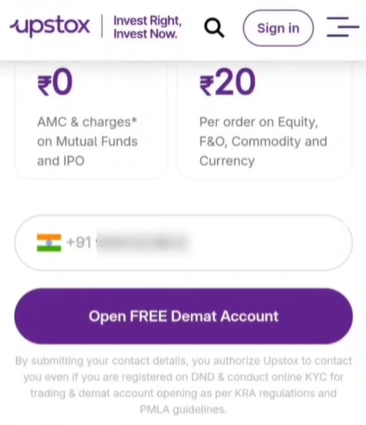


  • What Is NIFTY 50? Everything You Need to Know Before Investing

    What Is NIFTY 50? Everything You Need to Know Before Investing

    What Is NIFTY 50: Meaning, Definition, and Overview

    The NIFTY 50 is the most important stock market index in India. It shows how the top 50 largest and strongest companies in the country are performing on the National Stock Exchange. These companies come from different sectors such as banking information technology oil and gas telecom and consumer goods. Because of this wide coverage the NIFTY 50 gives a clear picture of the overall Indian stock market.

    The word NIFTY comes from combining two words National and Fifty. National refers to the National Stock Exchange and Fifty represents the 50 companies included in the index. When people say the market is going up or down they are often talking about the movement of the NIFTY 50.

    The NIFTY 50 was officially launched on 22 April 1996. It uses a base value of 1000 which was set on 3 November 1995. The index is managed by NSE Indices Limited which is a subsidiary of the National Stock Exchange. Over time the NIFTY 50 has become the main benchmark used by investors fund managers and analysts to measure the performance of the Indian equity market.

    This index is calculated using a free float market capitalization method. This means it only considers shares that are freely available for trading in the market and ignores promoter or government held shares. Because of this the index reflects real market activity and liquidity.

    The NIFTY 50 represents around sixty percent of the total market value of all companies listed on the NSE. Due to its size and influence it is widely used for index mutual funds exchange traded funds futures and options trading. Products like Nifty BeES directly track this index.

    In simple terms the NIFTY 50 acts like a report card for the Indian stock market. If the NIFTY 50 is rising it usually means large Indian companies are performing well and investor confidence is strong. If it falls it often signals weakness or uncertainty in the market. This is why understanding the NIFTY 50 is important for anyone interested in investing in Indian stocks.

    How the NIFTY 50 Index Works

    The NIFTY 50 index works by tracking the performance of India’s 50 largest and most actively traded companies listed on the National Stock Exchange. Instead of looking at the share price of just one company, the index combines the value of all 50 companies to show the overall direction of the stock market.

    When most companies in the index perform well, the NIFTY 50 goes up. When many of them fall, the index goes down. This makes NIFTY 50 a reliable indicator of how the Indian stock market is performing as a whole.

    Free Float Market Capitalization Explained

    NIFTY 50 uses a free float market capitalization method. This means the index only considers shares that are available for public trading. Shares held by promoters, governments, or founders that are not regularly traded are ignored.

    This approach ensures that only the investable portion of a company is counted. As a result, companies with higher publicly traded shares have a bigger impact on the index movement. This method gives a more realistic picture of market activity and investor participation.

    How the NIFTY 50 Value Is Calculated

    The value of the NIFTY 50 is calculated by combining the free float market value of all 50 companies in the index. Companies with larger market value influence the index more than smaller ones.

    For example, large companies like banks, IT firms, and energy companies affect the index more because of their size and trading volume. Smaller companies still matter, but their impact is limited. This weighted approach keeps the index stable and prevents sharp movements due to small stocks.

    Rebalancing and Review Process

    The NIFTY 50 index is reviewed twice every year to ensure it remains accurate and relevant. During this review, companies are checked for market size, liquidity, and trading activity.

    If a company no longer meets the required criteria, it can be removed from the index. At the same time, a stronger and more eligible company may be added. This process helps the index reflect current market leaders and removes underperforming stocks.

    Regular rebalancing keeps the NIFTY 50 updated with India’s changing economy and ensures it continues to represent the top companies in the stock market.

    Key Features and Importance of NIFTY 50

    Key Features and Importance of NIFTY 50

    The NIFTY 50 is not just a stock market index. It plays a very important role in how investors understand and track the Indian stock market. Below are the key features that explain why the NIFTY 50 matters so much.

    Represents India’s Leading Companies

    The NIFTY 50 includes the top fifty large and financially strong companies listed on the National Stock Exchange. These companies are selected based on their market size and liquidity. Because of this, the index represents nearly two thirds of the total free float market value of the NSE. When NIFTY 50 moves up or down, it usually reflects the overall direction of the Indian equity market.

    Covers Multiple Key Sectors

    One of the biggest strengths of NIFTY 50 is diversification. The index includes companies from more than thirteen major sectors such as banking, financial services, information technology, oil and gas, telecom, pharmaceuticals, consumer goods, and metals. This wide sector coverage reduces dependence on a single industry and gives investors exposure to the broader economy.

    Free Float Market Capitalization Method

    The NIFTY 50 uses a free float market capitalization method. This means only the shares available for public trading are considered while calculating the index value. Promoter holdings and locked in shares are excluded. This makes the index more realistic and investable, as it focuses on shares that are actually traded in the market.

    Regular Review and Rebalancing

    The index is reviewed and rebalanced twice every year. During this process, companies that no longer meet the eligibility criteria can be removed, and stronger companies can be added. This ensures that NIFTY 50 always includes the most relevant and high performing large cap companies in India.

    Acts as a Market Benchmark

    NIFTY 50 is widely used as a benchmark by mutual funds, portfolio managers, and individual investors. Many equity funds compare their performance against NIFTY 50 to measure how well they are doing. If a fund consistently beats NIFTY 50, it is considered to be performing well.

    Foundation for Index Funds and ETFs

    Most NIFTY index funds and exchange traded funds are designed to replicate the performance of NIFTY 50. Investors who do not want to pick individual stocks can invest in these funds and still benefit from the growth of top Indian companies. Products like Nifty BeES are built directly on the NIFTY 50 index.

    Indicator of Economic Health

    Since the index includes leaders from major industries, NIFTY 50 is often seen as an indicator of India’s economic health. Rising index levels usually signal economic growth and investor confidence, while sharp declines may indicate economic or global uncertainty.

    Suitable for Long Term Investors

    Over the long term, NIFTY 50 has delivered steady returns by capturing India’s economic growth. Because it includes stable and established companies, it is considered suitable for long term investors who want consistent wealth creation with relatively lower risk compared to mid cap or small cap stocks.

    Eligibility Criteria for NIFTY 50 Index Listing

    The Eligibility Criteria for NIFTY 50 Index Listing are the rules set by NSE Indices to ensure that only the strongest, most reliable, and highly traded companies become part of India’s benchmark index. These rules help maintain the quality, stability, and credibility of the NIFTY 50.

    Basic Listing Requirements

    To be considered for inclusion in the NIFTY 50 index, a company must be listed on the National Stock Exchange of India. It should be an Indian company and must be available for trading in the Futures and Options segment. The company should also have a minimum listing history of one month on the NSE, ensuring that it has enough trading data for evaluation.

    Regular trading activity is essential. The company’s shares must have traded on all trading days during the previous six months. In special cases involving newly listed companies, slightly relaxed conditions may apply, but consistent trading remains a key requirement.

    Liquidity Requirements

    Liquidity means how easily a stock can be bought or sold without causing major price changes. For NIFTY 50 eligibility, the company’s shares must be highly liquid. This is measured using a concept called impact cost, which reflects the price movement caused by large trades.

    To qualify, the stock must show low impact cost levels for most trading days over the last six months. This ensures that large investors can trade the stock easily and that the index remains practical for funds, ETFs, and derivatives linked to NIFTY 50.

    Market Capitalization Criteria

    Market capitalization plays a crucial role in selecting NIFTY 50 companies. The index focuses on free float market capitalization, which means only the shares that are freely available for public trading are considered.

    To be eligible, a company’s average free float market value over the past six months must be significantly higher than that of the smallest company already included in the NIFTY 50. This rule ensures that only large and financially strong companies form part of the index.

    In addition, the company must have a minimum percentage of shares available for public trading. This ensures broad investor participation and avoids concentration in a few hands.

    Selection and Review Process

    Eligible companies are ranked based on their average free float market capitalization over the last six months. The top fifty companies from this ranking become part of the NIFTY 50 index.

    The index is reviewed twice a year, usually in January and July. During this process, companies that no longer meet the eligibility criteria may be removed, and better performing eligible companies may be added. Quarterly checks are also conducted to ensure ongoing compliance with trading and liquidity requirements.

    Shares with differential voting rights can be included if they meet all eligibility and liquidity conditions.

    Top Companies Listed in NIFTY 50

    The NIFTY 50 index includes the fifty largest and most financially strong companies listed on the National Stock Exchange. These companies are leaders in their industries and play a major role in India’s economy. They come from different sectors such as banking, information technology, energy, telecom, and consumer goods.

    Because these companies have large market value and high trading activity, they carry more weight in the index. This means their share price movements have a bigger impact on how the NIFTY 50 moves on a daily basis.

    Leading Companies in the NIFTY 50

    Ranking by Market CapCompany
    1Reliance Industries
    2HDFC Bank
    3Bharti Airtel
    4Tata Consultancy Services
    5ICICI Bank
    6State Bank of India
    7Infosys
    8Bajaj Finance
    9Hindustan Unilever
    10Larsen & Toubro
    11Maruti Suzuki
    12Mahindra & Mahindra
    13HCL Technologies
    14Kotak Bank
    15Axis Bank
    16ITC
    17Sun Pharmaceutical
    18UltraTech Cement
    19Titan
    20Adani Ports & SEZ
    21NTPC
    22Oil & Natural Gas Corporation
    23Bajaj Finserv
    24Bharat Electronics
    25JSW Steel
    26Eternal
    27Power Grid Corporation of India
    28Coal India
    29Bajaj Auto
    30Adani Enterprises
    31Nestle
    32Tata Steel
    33Wipro
    34Asian Paints
    35Hindalco Industries
    36SBI Life Insurance
    37Eicher Motors
    38Grasim Industries
    39Interglobe Aviation
    40Shriram Finance
    41Jio Financial Services
    42Tech Mahindra
    43HDFC Life Insurance
    44Trent
    45Tata Motors Passenger Vehicles
    46Tata Consumer Products
    47Cipla
    48Dr Reddys Laboratories
    49Apollo Hospitals
    50Max Healthcare Institute

    The ranking may change depending on stock market performance and reflects data recorded as of 8 February 2026.

    Sector Wise Representation

    The banking and financial services sector has the highest share in the NIFTY 50. This is because banks and financial institutions form the backbone of the Indian economy.

    The information technology sector is another important part of the index. IT companies benefit from global demand and provide stability during different economic cycles.

    Energy and oil and gas companies also hold a significant position, reflecting India’s growing energy needs. Telecom, consumer goods, pharmaceuticals, and infrastructure sectors add further balance to the index.

    Why These Companies Matter to Investors

    The companies included in the NIFTY 50 are known for their stability, strong management, and long term growth potential. Since these are large and trusted businesses, they are less risky compared to smaller companies.

    Investing in NIFTY 50 means indirectly investing in all these top companies at the same time. This reduces the risk of depending on a single company and provides steady growth over the long term.

    History and Performance of NIFTY 50

    The journey of NIFTY 50 started in nineteen ninety six when the National Stock Exchange introduced it as India’s main stock market index. The idea was simple. Track the performance of the fifty largest and most reliable companies to understand how the overall market is doing. The base value was fixed at one thousand, using November nineteen ninety five as the starting point.

    In the late nineteen nineties and early two thousands, the index was largely driven by public sector banks, oil companies, and traditional manufacturing firms. As India’s economy opened up, private banks and technology companies slowly began to play a bigger role in the index.

    The year two thousand eight was a difficult phase for NIFTY 50. The global financial crisis caused markets around the world to fall sharply, and India was no exception. NIFTY 50 dropped heavily during this period, but it later recovered as the economy stabilized and confidence returned.

    In two thousand nine, an important improvement was made to the index calculation. NIFTY 50 shifted to the free float market capitalization method. This change made the index more practical because it started counting only those shares that were actually available for public trading.

    By two thousand seventeen, NIFTY 50 crossed the ten thousand level for the first time. This reflected strong economic growth, rising corporate profits, and increasing participation from domestic and foreign investors.

    Another major test came in two thousand twenty during the COVID pandemic. Markets fell sharply due to lockdowns and uncertainty. However, the recovery was faster than expected, supported by strong banking, technology, and consumer companies.

    In the mid two thousand twenties, NIFTY 50 reached new highs, showing the strength of India’s large companies even during global challenges. Over long periods, the index has delivered average yearly returns of around twelve to fifteen percent, making it a dependable option for long term investors.

    The overall history of NIFTY 50 shows that while short term ups and downs are normal, long term growth remains strong when investors stay patient and invested.

    What Is Nifty BeES?

    Nifty BeES is an Exchange Traded Fund that allows investors to invest in the NIFTY 50 index in a simple and low cost way. The term BeES stands for Benchmark Exchange Traded Scheme. It was launched in December 2001 by Nippon India Mutual Fund and is known as India’s first ETF.

    Nifty BeES is designed to copy the performance of the NIFTY 50 index. This means when the NIFTY 50 goes up, the value of Nifty BeES also rises, and when the index falls, its value declines as well. Instead of buying shares of all 50 companies separately, investors can buy a single unit of Nifty BeES and get exposure to all NIFTY 50 companies at once.

    Each unit of Nifty BeES represents a small portion of the NIFTY 50 index, making it affordable even for small investors. The fund follows a passive investment strategy, so the fund manager does not try to beat the market. The goal is simply to match the returns of the NIFTY 50 index as closely as possible.

    Nifty BeES is traded on the stock exchange just like a regular share. Investors can buy and sell it during market hours using a demat and trading account. Since it is exchange traded, prices change throughout the day based on demand and supply.

    One of the biggest advantages of Nifty BeES is its low cost. The expense ratio is usually much lower than actively managed mutual funds. This helps investors keep more of their returns over the long term. However, returns may be slightly lower than the index due to small expenses and tracking error.

    Overall, Nifty BeES is a simple, transparent, and efficient way for investors to participate in the growth of India’s top 50 companies without the need to select individual stocks.

    Benefits of Investing in NIFTY 50

    Benefits of Investing in NIFTY 50

    Investing in NIFTY 50 is considered one of the simplest and safest ways to participate in the Indian stock market, especially for long term investors. Since the index represents the top 50 companies in India, it offers several practical benefits.

    Diversification across strong companies

    NIFTY 50 includes companies from multiple sectors such as banking, IT, energy, telecom, and consumer goods. This means your money is spread across different industries instead of being dependent on a single company or sector. Even if one sector performs poorly, others can balance the impact.

    Exposure to India’s biggest and most stable businesses

    The index consists of large, well established companies like leading banks, IT firms, and industrial giants. These businesses have strong financials, proven management, and long operating histories, which reduces the risk compared to investing in small or unknown companies.

    Low cost investing

    NIFTY 50 index funds and ETFs are passively managed, which means there is no active stock picking. As a result, the expense ratio is much lower compared to regular mutual funds. Lower costs help investors keep more of their returns over time.

    Consistent long term growth potential

    Historically, NIFTY 50 has delivered steady long term returns despite short term ups and downs. Market crashes and corrections do happen, but the index has always recovered over time, making it suitable for long term wealth creation.

    No need to pick individual stocks

    Selecting winning stocks requires deep knowledge, time, and constant tracking. By investing in NIFTY 50, you automatically invest in the best performing large cap companies without worrying about choosing or managing individual stocks.

    High liquidity and transparency

    NIFTY 50 stocks and related investment products are highly liquid, meaning they can be easily bought or sold during market hours. The index composition, weightage, and performance are publicly available, ensuring full transparency for investors.

    Ideal for SIP and passive investors

    NIFTY 50 is well suited for systematic investment plans, allowing investors to invest small amounts regularly. This helps in managing market volatility and builds disciplined investing habits, especially for beginners.

    Suitable for most types of investors

    Whether you are a beginner, a salaried professional, or a long term investor planning for future goals, NIFTY 50 offers a balanced and reliable investment option without the complexity of active trading.

    How Can You Invest in NIFTY 50?

    How Can You Invest in NIFTY 50

    Investing in the NIFTY 50 is simple and suitable even for beginners. You do not need to buy shares of all 50 companies individually. Instead, you can invest through financial products that track the NIFTY 50 index and give you exposure to all its companies at once.

    Investing Through NIFTY 50 Index Mutual Funds

    NIFTY 50 index mutual funds are designed to copy the performance of the NIFTY 50 index. These funds invest in the same 50 companies and in the same proportion as the index.

    To invest, you need a mutual fund account, which you can open online through fund house websites or investment apps. You can invest a lump sum amount or start a SIP, where a fixed amount is invested every month. SIPs are ideal for long term investors because they reduce market timing risk and help build wealth gradually.

    Index mutual funds have low expense ratios because they are managed passively. Over the long term, they aim to deliver returns similar to the NIFTY 50, minus a small cost.

    Investing Through ETFs Like Nifty BeES

    Exchange Traded Funds or ETFs such as Nifty BeES also track the NIFTY 50 index. These trade on the stock exchange just like shares.

    To invest in Nifty BeES, you need a demat and trading account. You can buy or sell ETF units during market hours at real time prices. ETFs offer flexibility and transparency, as prices change throughout the day based on market demand and supply.

    ETFs usually have very low costs, but their market price may slightly differ from the actual index value due to demand and supply.

    Investing Through Futures and Options

    Experienced investors can invest in NIFTY 50 through futures and options contracts. These are derivative instruments used mainly for trading or hedging purposes.

    This method involves higher risk and requires a good understanding of the market. It is not recommended for beginners or long term passive investors.

    Direct Investment Is Not Possible

    You cannot invest directly in the NIFTY 50 index itself. The index is only a measurement tool. You can invest only through products like index funds, ETFs, or derivatives that track the index.

    Which Option Is Best for You?

    If you are a beginner or a long term investor, NIFTY 50 index mutual funds and ETFs are the best choices. Index funds are better for those who prefer simple investing and SIPs. ETFs are suitable for investors who already have a demat account and want more control over buying and selling.

    Conclusion – Why NIFTY 50 Is the Backbone of Indian Equity Markets

    The NIFTY 50 is more than just a stock market index. It represents the overall health and direction of the Indian equity market. By tracking the top 50 largest and most reliable companies across key sectors, it gives investors a clear picture of how India’s economy is performing.

    For beginners, the NIFTY 50 offers a simple and safe way to understand the stock market without getting lost in individual stock selection. For experienced investors, it acts as a trusted benchmark to measure portfolio performance and make informed investment decisions. Since it covers a large portion of the market and includes industry leaders, its movement reflects real changes in business growth, investor confidence, and economic trends.

    The NIFTY 50 has also proven its strength over time. Despite market crashes and economic slowdowns, it has consistently recovered and delivered steady long-term growth. This makes it a strong foundation for long-term wealth creation through index funds and ETFs.


  • What Is Stock Market in Simple Words? Start Your Investing Journey Today

    What Is Stock Market in Simple Words? Start Your Investing Journey Today

    What Is Stock Market in Simple words?

    Imagine the stock market as a massive online marketplace where people buy and sell pieces of companies, just like you’d trade baseball cards or fruits at a bazaar. You know those big brands you love, like Apple or Reliance? When they need cash to grow, they chop up ownership of their companies into tiny shares called stocks and sell them to folks like you and me.

    You can hop in by opening a trading account on apps like Upstox, Groww or Zerodha. Buy low when a company’s price dips, due to some events, bad news or some other factore, and sell when the prices increases. Prices swing daily based on news, earnings, or even global events. It’s like a rollercoaster ride fueled by millions of buyers and sellers worldwide.

    How the Stock Market Works?

    Primary Market

    The primary market is where a company first raises money from the public. When a company such as Reliance, Tata, or Zomato wants funds to expand its business, set up new facilities, or launch new products, it issues fresh shares through an Initial Public Offering (IPO).

    In an IPO, investors buy shares directly from the company for the first time. Investment banks and regulatory bodies help determine the issue price, and investors apply for shares through platforms linked to the National Stock Exchange (NSE) or Bombay Stock Exchange (BSE). The money raised through this process goes directly to the company and is used for its growth and operations. This fundraising event happens only once for each set of newly issued shares.

    Secondary Market

    After the IPO, the shares are listed on stock exchanges such as the NSE and BSE. This is known as the secondary market. Here, investors buy and sell shares among themselves on a daily basis. The company does not receive any money from these transactions.

    Stock prices in the secondary market are determined by supply and demand. If more investors want to buy a stock, its price rises. If more investors want to sell, the price falls. Prices change regularly based on factors such as company performance, financial results, economic news, and market conditions.

    The secondary market allows investors to earn returns over time by buying shares at lower prices and selling them at higher prices, or by holding quality stocks for long-term wealth creation.

    DIFFERENCE BETWEEN PUBLIC COMPANY AND PRIVATE COMPANY

    A public company allows anyone to buy its shares through stock exchanges. As a result, ownership is open to the general public, and there is no maximum limit on the number of shareholders. In contrast, a private company keeps its shares within a small group, such as founders, family members, or selected investors. It limits the number of shareholders to 200 and restricts the transfer of shares to maintain control.

    Public companies must follow strict regulations. They are required to disclose their financial statements regularly, appoint at least three directors including independent directors, and include the words “Public Limited” in their company name. Private companies have fewer regulatory requirements. They need only two directors, are not required to disclose financial information publicly, and use “Private Limited” in their name. This allows private companies to maintain confidentiality and make decisions more quickly.

    There are also differences in how these companies raise funds. Public companies can raise capital by issuing shares to the public through prospectuses, which allows them to access large amounts of funding. These shares can be easily bought and sold on stock exchanges. Private companies raise funds through private placements, which can be more limited but allow greater flexibility in operations.

    Both public and private companies serve different purposes and are suitable for different stages of business growth, as defined under laws such as India’s Companies Act.

    HOW ARE SHARE BOUGHT AND SOLD

    To buy shares, you first need to open an account with a stockbroker. The broker connects you to a stock exchange such as the National Stock Exchange or the Bombay Stock Exchange. You then place an order by selecting the company’s shares, the number of shares you want to buy, and the price you are willing to pay. This price is called a bid.

    At the same time, sellers place their orders with an asking price, which is the minimum price they are willing to accept. When a buyer’s bid matches a seller’s asking price, the stock exchange automatically executes the trade. The shares are credited to the buyer’s account, and the money is transferred to the seller’s account. This process usually settles within two business days.

    Selling shares follows the same process in reverse. You instruct your broker to sell your shares at a chosen price. Once a buyer agrees to that price, the trade is completed, and the sale amount is credited to your account after applicable charges.

    Share prices change continuously due to factors such as supply and demand, company performance, and market news, making timing an important factor in investing.

    What Is a Stock Exchange?

    A stock exchange is a regulated platform where people buy and sell shares of publicly listed companies, along with other securities like bonds. It connects companies seeking funds with investors willing to purchase ownership stakes, ensuring transactions occur transparently through electronic systems. Brokers submit orders on behalf of clients, and computers match buyers with sellers based on price and volume, determining fair market values.

    In places like India’s BSE or NSE, or global ones such as the NYSE, trading happens during set hours under oversight from bodies like SEBI to protect participants and maintain order. Companies list shares here to raise capital for expansion without direct borrowing, while investors trade to build wealth or adjust portfolios. This setup provides liquidity, meaning shares convert to cash quickly, and real-time pricing reflects supply-demand dynamics. Overall, stock exchanges drive economic growth by channeling savings into productive businesses.

    Other instrument traded on stock market

    Other instrument traded on stock market

    Indian stock exchanges like NSE and BSE trade a variety of securities beyond equity shares. These include preference shares with fixed dividends and priority payouts, various debentures such as non-convertible, partly convertible, and fully convertible types, as well as warrants and secured premium notes.

    Other instruments feature bonds, including government securities and corporate bonds, units of mutual funds, and exchange-traded funds like gold or commodity ETFs. Derivatives such as futures and options on indices, stocks, currencies, and commodities are actively traded, alongside hybrid securities that blend debt and equity traits.

    Indian Depository Receipts from foreign companies, participatory notes, and even ESG or green bonds round out the list, offering diverse investment avenues under SEBI regulation.

    WHAT ARE INDICES

    Stock market indices track the performance of a selected group of stocks, acting as benchmarks for overall market health. They use weighted averages of share prices to reflect trends in specific sectors, regions, or the broader economy.

    Key Types

    • Benchmark Indices: Represent the entire market with top companies.
    • Sectoral Indices: Focus on industries like banking or IT.
    • Market Cap Indices: Group stocks by company size, such as large-cap or mid-cap.

    Examples

    IndexExchangeDescription 
    Nifty 50NSETop 50 companies by market cap
    SensexBSE30 largest, blue-chip firms
    S&P 500US500 leading U.S. companies
    Nifty BankNSEBanking sector performance

    Important terminologies

    Bull Market: A period when stock prices rise steadily due to optimism and strong economic signals. Investors gain confidence, leading to higher buying activity and broader market growth.

    Bear Market: A phase where stock prices fall significantly over months, often from economic downturns. Selling pressure dominates as pessimism spreads among participants.

    Dividend: Payments companies make to shareholders from profits, usually quarterly. They provide steady income alongside potential capital appreciation.

    IPO (Initial Public Offering): The first sale of a company’s shares to the public to raise funds. It transitions private firms to public status under exchange listing.

    P/E Ratio: Price-to-earnings ratio measures a stock’s price relative to per-share earnings. Lower values suggest undervaluation, aiding value investment decisions.

    Market Order: An instruction to buy or sell a stock immediately at the current market price. Execution prioritizes speed over exact pricing control.

    Limit Order: A directive to trade only at a specified price or better, offering precision. It avoids unfavorable fills but risks non-execution if unmet.

    Stop Loss: An automatic sell order triggered when a stock hits a set lower price. It caps losses during adverse moves while allowing gains.

    ETF (Exchange-Traded Fund): A fund mirroring an index or sector, traded like stocks on exchanges. It diversifies holdings cost-effectively with intraday liquidity.

    Index: A benchmark tracking a group of stocks, like Nifty 50 or Sensex in India. It gauges overall market performance and guides portfolio benchmarks.

    For beginners, we have also created a free PDF covering over 70 key stock market terms commonly used. You Can Download it for Free

    How can you invest in the stock market?

    How can you invest in the stock market

    To invest in the stock market, you must first open a Demat account, which holds your shares in electronic form. You also need a linked trading account that allows you to buy and sell shares. Choose a broker registered with the Securities and Exchange Board of India, such as Zerodha or Angel One. You will need to submit documents like your PAN card, Aadhaar card, bank details, and address proof for KYC verification. This process is completed online and is usually paperless, allowing the account to be opened quickly, often within one day.

    After your account is approved, transfer funds from your bank account to your trading account using options such as UPI or net banking. Then, log in to the broker’s website or mobile application and research stocks using the available tools. You can review company performance, financial health, and other factors to ensure they align with your investment goals.

    To invest, place a buy order by selecting the stock, the number of shares, and the order type, such as a market order or a limit order. Once the transaction is completed, the shares are credited to your Demat account, usually by the next business day under the T+1 settlement system.

    It is important to monitor your portfolio regularly, add funds when required, and sell shares when your investment goals are achieved. Focusing on long-term growth rather than daily price movements can help you build wealth in a systematic and secure manner.

    Advantages of the Stock Market

    The stock market allows companies to raise capital by issuing shares. This helps them fund business expansion and daily operations without relying heavily on loans. As a result, companies can innovate, create jobs, and strengthen their position in the market.

    Investors benefit by building wealth through an increase in share prices and by earning dividends. Over the long term, stock market investments often grow faster than inflation. Investors also enjoy liquidity, as shares can be sold quickly when funds are needed.

    Employees may benefit through stock options or Employee Stock Ownership Plans. These incentives link employee rewards with company performance and encourage higher motivation and long-term commitment.

    Retirees and pension funds use the stock market to achieve long-term financial growth. Diversified investments, such as index funds and well-established companies, help reduce risk while supporting stable returns.

    Brokers and financial advisors earn income through commissions and service fees. Regulatory bodies like the Securities and Exchange Board of India ensure transparency and fair practices, which contributes to overall economic stability through monitored growth and tax revenues.

    Why Is the Stock Market Important?

    The stock market plays a key role in the economy by directing savings from individuals to companies that need funds for growth. This process supports innovation, business expansion, and job creation while allowing companies to raise money without excessive borrowing. At the same time, investors grow their wealth through rising share values and dividends, helping them stay ahead of inflation.

    The stock market also acts as an indicator of economic health. Movements in major indices such as the Nifty and Sensex reflect investor confidence and help guide business and policy decisions. Liquidity in the stock market allows assets to be converted into cash easily, encouraging spending and contributing to economic growth. In India, the stock market supports infrastructure development, business ownership through equity, and retirement planning, helping maintain financial stability without increasing debt.